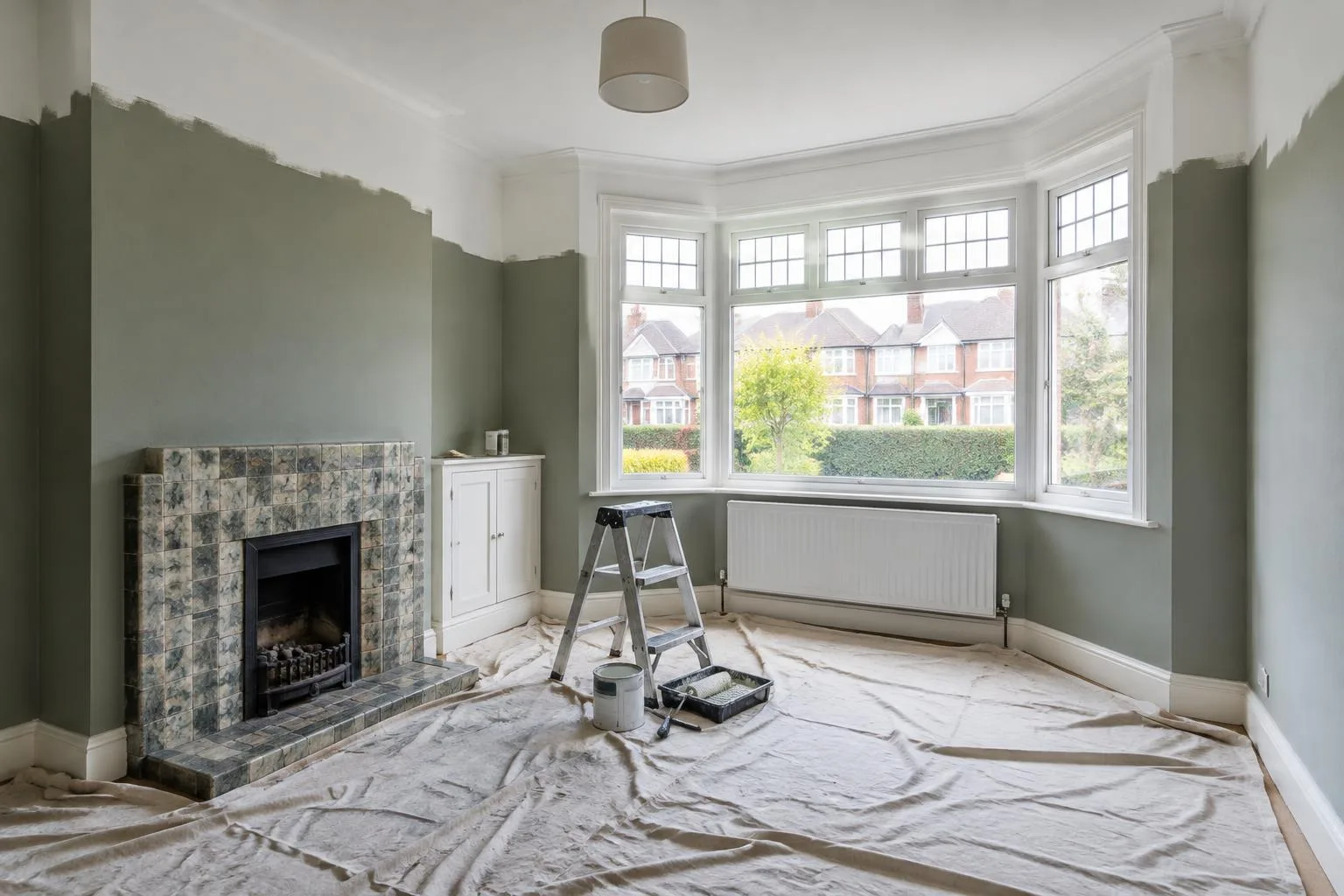
Plan the rooms you want painted
A bedroom refresh and a whole-house change do not need the same conversation. Write down the rooms, then distinguish ceilings, walls, skirting, frames and doors within each. Note whether built-in cupboards or other fitted items belong in the project. This prevents a description such as repaint the lounge from leaving the woodwork uncertain. Colour choices can remain open while the initial work is discussed.
Ceilings, hallways and stairs
Light across a ceiling can reveal old repairs differently from light on a wall. Explain staining or earlier plaster work rather than assuming a finish coat will cover everything. A hallway joins rooms people still need to reach; a staircase adds height and awkward angles. Discuss how those routes are used and how safe access to higher surfaces will be arranged. Plan around the routes you need to keep using at home.
Protecting what stays in the home
Tell Eric which furniture can leave the room and which pieces must remain. Flooring, fitted cupboards, curtains and sockets each create boundaries around the painting. Protection needs to match the arrangement, not merely the room size. Households with children, pets or someone working from home should identify the spaces that cannot be cleared at the same time. Agree who moves belongings and when rather than discovering those responsibilities after the work starts.
Preparing the surface for new paint
Filled holes, cracks, shiny old woodwork and newly plastered areas do not all accept paint in the same way. Cleaning, light sanding to help the paint adhere, filling and priming are considered according to what is present. A damp mark deserves investigation before it becomes a painting job. Photos can help describe the condition but cannot substitute for checking uncertain materials. Wallpaper removal, if needed, should be identified separately because the uncovered surface may require additional assessment.
Choosing tools indoors
Traditional brush and roller work can be practical for furnished rooms, detailed edges and smaller areas. Airless equipment may suit broad walls or ceilings where the room can be cleared and surrounding surfaces protected. HVLP is a separate option for suitable fine woodwork. The method is selected alongside the coating and access, not as a promise that one tool always produces a superior result. A mixed approach can be discussed where the project contains different kinds of surface.
Bring the finish into the conversation
Consider how each space will be used after painting. A bedroom wall and frequently handled stair trim have different demands. Describe the look you want, any colours you want to keep, and whether adjoining rooms should be coordinated. Existing texture can remain visible after repainting; a photograph of another property is not a guarantee of the same result here. The quotation should describe the agreed work and preparation for your home.