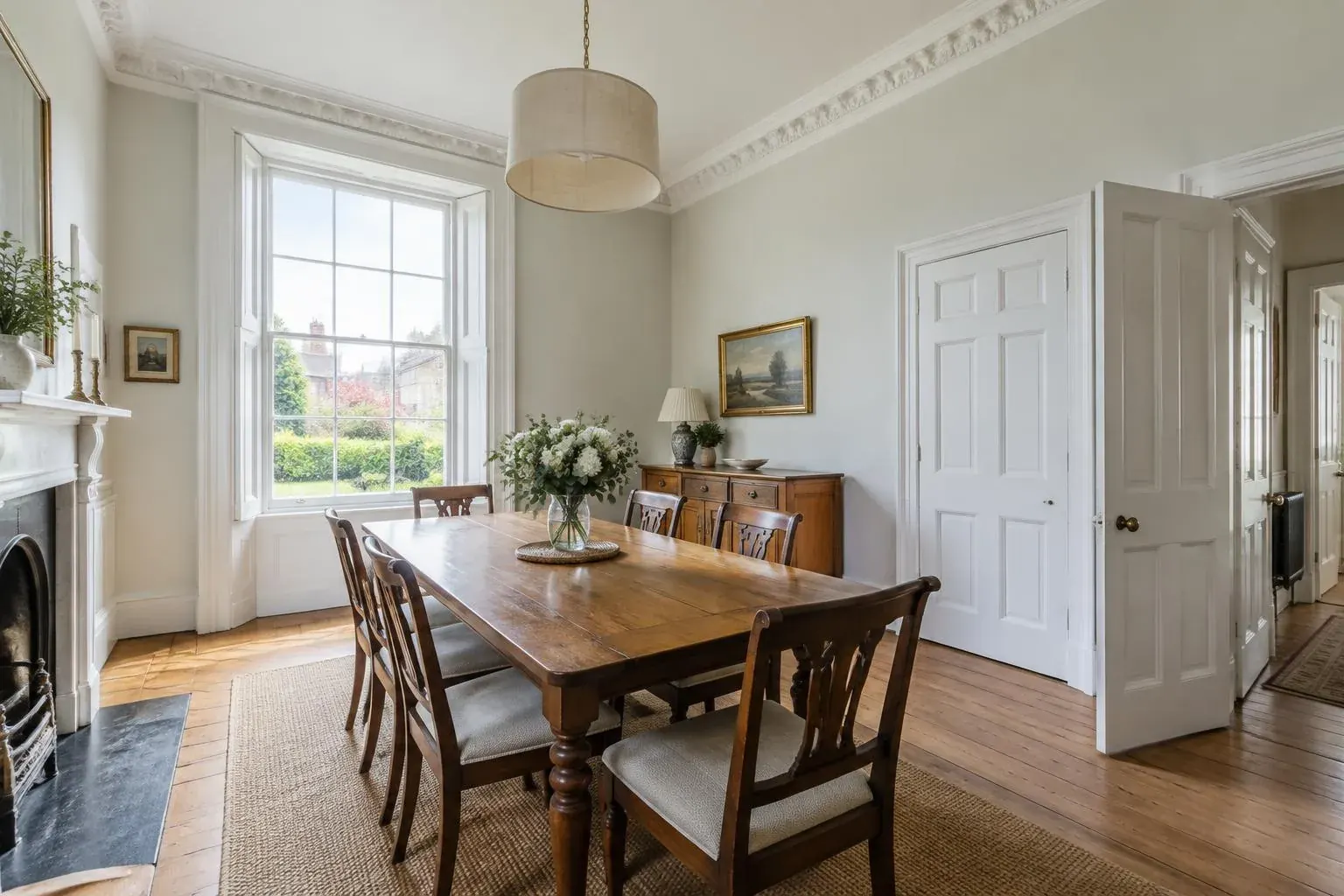
Doors, skirting, frames and the rest
Woodwork is everything timber or timber-like in a room that is not the wall or ceiling: internal doors and their linings, skirting boards, architraves, window frames and sills, picture rails, dado rails, boxing around pipes, banisters and spindles. Radiators are usually painted at the same time because they sit in the same eyeline and take the same kind of finish. It is the part of a room that takes the most knocks, from hoovers, shoes and bags, so it shows wear long before the walls do.
Preparation that decides the finish
Good woodwork painting is mostly preparation. Surfaces are washed down first, because grease from hands and kitchen steam stops new paint gripping. Old gloss is sanded to take the shine off and give it a key. Dents, split joints and gaps along the top of skirting are filled or caulked and sanded smooth. Any bare timber gets a primer, and resinous knots are sealed with knotting solution so they do not bleed brown through the topcoat a few months later. Flaking areas are scraped back to something sound first.
Skipping these steps is why so much woodwork chips at the edges or shows brush marks over old runs. It is slow, careful work, but it is what makes the new coat look crisp.
Brushed or sprayed
Most skirting, frames and architraves are painted by brush, as they are fixed in place and close to walls and floors. Doors, spindles and panelled items can be sprayed with HVLP equipment, which gives a smooth, even coat without brush marks. Spraying needs more masking, or the item taken off and done separately, so it suits some jobs better than others. Eric will suggest the approach for each item when he sees it.
Water-based or oil-based paint
Oil-based gloss and satin used to be the standard for woodwork. Water-based versions are now widely used: they dry faster, smell less and tend to keep their colour better. Oil-based paints still have their fans for their flow and toughness. Switching from one to the other is possible, but painting water-based paint over old oil-based gloss needs a thorough sand and the right primer, or it can peel. We will talk through which suits your home.
Why old white gloss turns yellow
If your doors and skirting have gone cream or yellow, the paint is probably oil-based. This kind of paint yellows as it ages, and faster in rooms with little daylight, such as hallways or behind doors. Another coat of the same paint will do the same in time. Moving to a water-based system after proper preparation is the usual fix.
Radiators, banisters and handrails
Radiators must be switched off and cold before painting, and stay off until the paint has hardened. We use paint suited to warm surfaces. Banisters and handrails are handled every day, so they need a hard-wearing finish and enough drying time before the household uses them again. The staircase page covers spindles and stairwells in more detail.
Window frames and sills
Timber window frames inside the house often suffer from condensation, especially on the sills and bottom rails. Soft or blackened areas are checked, failed filler is cut out and replaced, and bare wood is primed before painting. The paint is taken a millimetre or two onto the glass, which helps seal the joint between glass and frame. Opening windows are left slightly ajar while drying where it is safe, so they do not stick shut.
Picture rails, dado rails and boxing
Smaller pieces of woodwork are easy to forget in a quote. Picture and dado rails, pipe boxing, cupboard doors under the stairs and loft hatches all take time to prepare and paint, so list them when you ask for a price. If you want any of them painted to match the wall rather than the rest of the woodwork, say so, as it changes the order of work.
Fitting woodwork into a wider job
Woodwork is usually painted after the ceilings and walls, so any splashes on the edges can be cleaned up. Some people have it done on its own, when walls are fine but doors and skirting are tired. Either way, call Eric on 07872 324935 or use the form on this page.