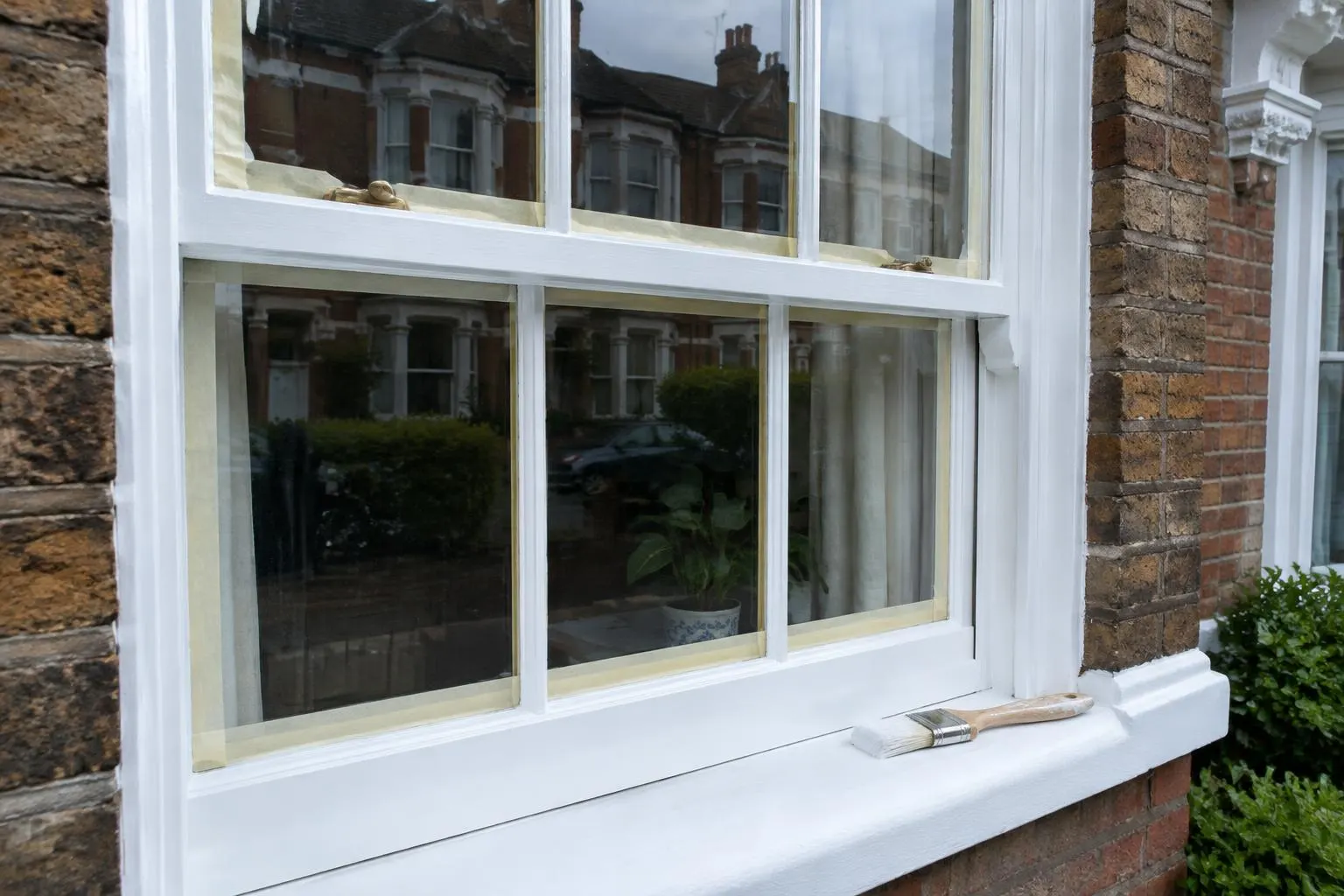
Period sashes across our area
Vertical sliding sash windows are common on Georgian, Victorian and Edwardian houses, and they are especially familiar in conservation-area streets in Sevenoaks, Bromley, Beckenham, Tunbridge Wells and Greenwich. In those streets, the windows often matter to the look of the whole terrace, so owners tend to want them repainted in keeping with the house rather than replaced.
Easing and preparing
Before painting, we check that each sash moves. Paint lines between the sash and the frame or beads are cut through carefully so the window is not forced. Surfaces are washed, loose and flaking paint is scraped back, and the timber is sanded to a sound edge. Small cracks and dents are filled, bare wood is primed, and knots are sealed. Areas of soft or rotten timber are pointed out at this stage rather than painted over.
Keeping sashes from sticking
Painted-shut sashes are one of the most common complaints about old windows, and they are nearly always caused by paint on surfaces that should be left clean, or by moving parts closed before the paint has hardened. We keep paint off the sliding faces and the channels the sashes run in, avoid building up thick layers on the edges, and move each sash during drying so it does not bond to its frame. Windows are left in a safe, secure position overnight.
Putty and glazing bars
The putty that holds the glass in place takes the worst of the weather. Cracked or loose putty lets water reach the timber, so we check it as part of the preparation and point out where it needs attention. When painting, the new coat is taken a couple of millimetres onto the glass to seal the joint between glass and putty. Glazing bars on multi-pane sashes are slim and easily damaged, so they are worked by hand with care.
Repairs are a separate trade
Joinery repairs, such as replacing rotten sections of sill or rail, renewing broken sash cords or splicing in new timber, are work for a specialist joiner or sash window restorer, not a decorator. If your windows need repairs, it is best to have them done first. We can then prepare and paint the repaired windows so everything finishes together.
Paint systems for outside
Exterior sashes need a paint made for outdoor joinery. That might be a traditional primer, undercoat and gloss, or a modern flexible system designed to move with the timber and let moisture escape. Both oil-based and water-based options exist, and the best choice depends on what is already on the window. In conservation areas, traditional colours such as off-whites, creams and dark heritage shades are often expected, so check with your council before a big change.
Inside faces
Inner faces, linings and window boards are painted too, ideally at the same time so the window works as one job. Condensation often damages the bottom rail and sill inside, so these get extra attention during preparation.
Why regular repainting matters
Paint is what protects old timber from water. Once it cracks or flakes, rain gets into the wood, particularly on sills and bottom rails, and rot can follow. Repainting before the coating breaks down completely means less preparation each time and helps the windows last much longer. Checking them every year or two lets you catch problems early.
Linings, boxes and surrounding woodwork
The window linings, architraves and the box frame visible around the sashes are usually painted with the window. Inside, many period homes also have window shutters or panelling, which can be included in the same job.
Booking sash window work
Exterior painting needs dry, settled weather. Let us know how many windows there are, how high they sit and whether any repairs are planned. Call Eric on 07872 324935 or use the form on this page.