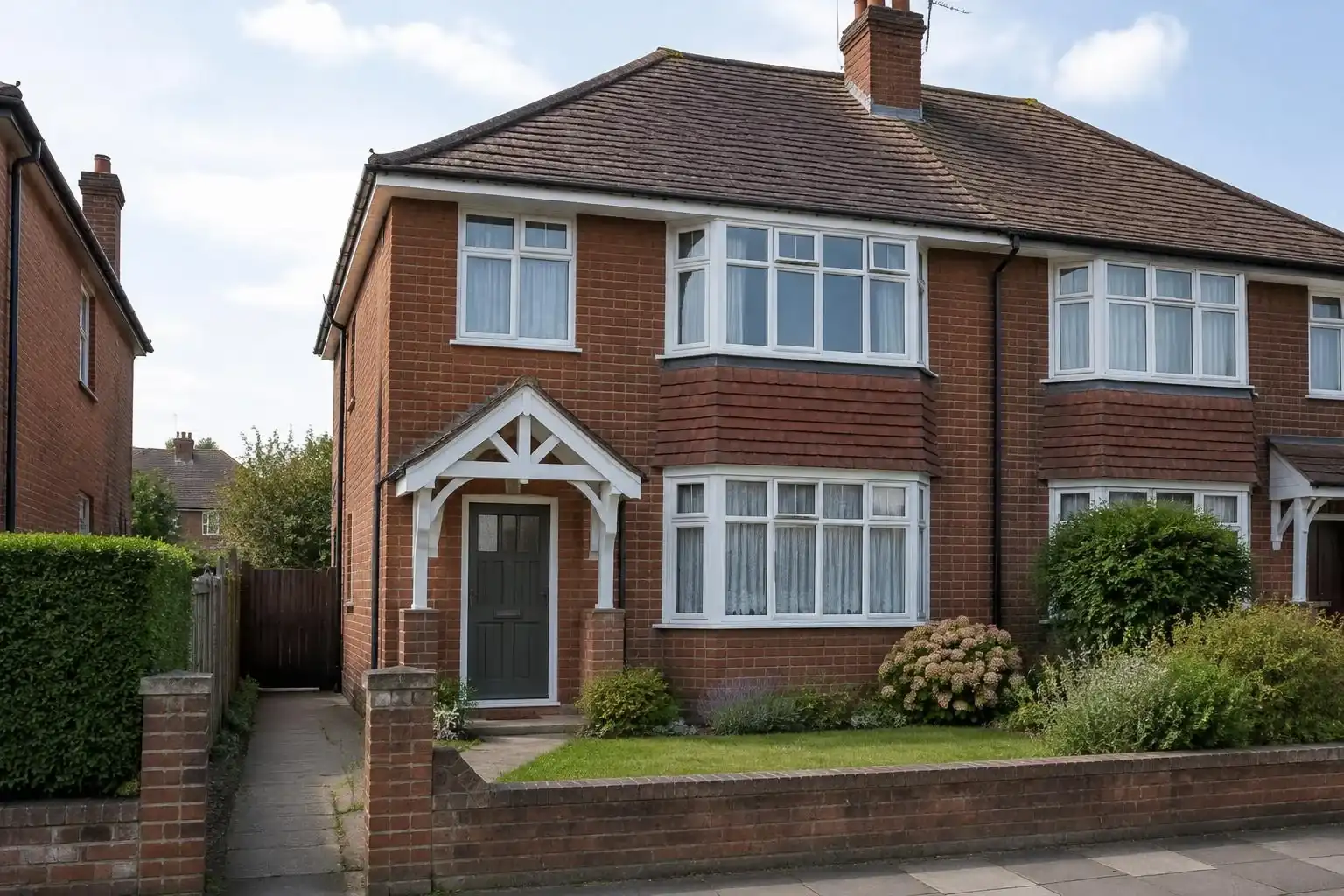
Rendered, pebble-dashed and brick walls
Smooth render, textured render and pebble-dash are the most common painted exterior finishes on houses around here, with painted brick on some older properties. Each takes paint differently. Pebble-dash soaks up a lot of paint and needs working into every stone. Smooth render shows every crack and patch. Bare brick is a bigger decision, because once painted it is very hard to go back, and it can change how the wall handles moisture.
Cleaning off algae and dirt
Green and black growth on north-facing walls has to be removed, not painted over. The wall is treated with a suitable biocidal wash, left to work, then cleaned down. Loose paint, dirt and cobwebs are brushed or scraped off. Painting onto any of this means the new coat sits on a weak layer and comes away with it.
Cracks and chalky surfaces
Fine cracks in render are raked out and filled with an exterior filler, so water cannot get behind the paint. Wide or stepped cracks, or cracks that keep coming back, can point to movement, and those should be looked at by a surveyor or builder before decorating. Old masonry paint often turns powdery. If your hand comes away white when you rub the wall, the surface is chalky, and it needs a stabilising coat first so the new paint has something firm to bond to.
Breathable masonry paints
Masonry walls need to let moisture vapour out. Masonry paints are made to be breathable for that reason, and come in smooth and lightly textured versions. Using a paint that seals the wall too tightly can trap moisture behind it. We will suggest a suitable product for your wall in general terms when we see it.
Why render bubbles or flakes
Bubbling and flaking on render usually comes from moisture trying to escape: water getting in through cracks, gutters overflowing onto the wall, paint applied while the wall was damp, or a non-breathable coating. Chalky or dirty surfaces underneath also cause the paint to let go. The cause needs dealing with before repainting, or the new coat will fail in the same way.
Gutters, downpipes and sills
Before painting the walls, it is worth checking whatever sends water down them. Blocked or leaking gutters and downpipes stain render and keep it damp, which shortens the life of any paint. Cracked or missing window sills let water run straight down the wall. These may need repairing by the relevant trade before decorating. Painted sills and plinths are usually redone as part of the job.
Pebble-dash in particular
Pebble-dash has a huge surface area for its size, with every stone and gap needing coverage. Paint is worked in with a brush or a deep-pile roller, and spraying can be discussed where the house and surroundings suit it. Loose stones are brushed off, and patches where the dash has fallen away may need a builder to repair them first.
Choosing a colour for the outside
Exterior colours look very different in full daylight compared with a small chart. Paint a sample patch on a shaded wall and a sunny one, and look at them at different times of day. Think about how the colour sits next to neighbouring houses, especially on a terrace or semi. Lighter colours show dirt and algae sooner, while darker ones can fade more in strong sun.
Woodwork and trim on the same job
Fascias, soffits, window frames and doors are usually painted when the walls are done, so the whole front looks finished at once and access equipment is only set up once. Our exterior painting page covers the woodwork side in more detail.
Dry weather and access
Masonry needs to be dry before painting and the paint needs dry, mild weather to cure, so outside work is usually booked from spring to early autumn and can shift with the forecast. Access depends on the height and shape of the house. Some walls can be reached with ladders, while others need towers or scaffolding, which affects the cost and timing. Call Eric on 07872 324935 or use the form on this page.