Decorating spaces that work hard
Business premises ask more of a finish than a quiet spare room. Corridors see passing traffic, reception walls sit behind visitors, and shared kitchens attract splashes and marks. Choosing a coating starts with the way each space is used, rather than simply carrying one paint specification through the whole building.
Mode Decorating covers commercial interiors and exteriors, using traditional brush and roller application as well as spraying. Offices are the main service, alongside decorating for shops, communal areas and other business premises. Eric Purnell has traded for 20 years and is based in Swanley.
A practical plan around your operations
Access, opening times and the movement of people all affect the decorating plan. Before work is agreed, identify the rooms that can be taken out of use, the entrances that must remain accessible and any deliveries or meetings that need to be accommodated. A clear brief lets these constraints be discussed alongside the surfaces being painted.
Out-of-hours or weekend work can be discussed with the client. These arrangements are agreed for the particular job, not assumed as a standard promise. Splitting a larger project into sections may be useful where closing an entire floor is not practical. Preparation and drying still need adequate time, whatever the chosen working hours.
Washable finishes and sensible colour choices
A busy space may benefit from a washable finish, while a ceiling has different demands. Consider cleaning requirements, the condition beneath the paint and the appearance you want under your existing lighting. A darker accent colour can work well in one part of a room but change how another area feels.
The specification should distinguish walls, ceilings, doors and trim. Existing coatings and repaired sections may require different preparation. Choosing a durable finish does not remove the need for cleaning, filling and priming where appropriate; the surface beneath is part of the result.
Large surfaces and airless spraying
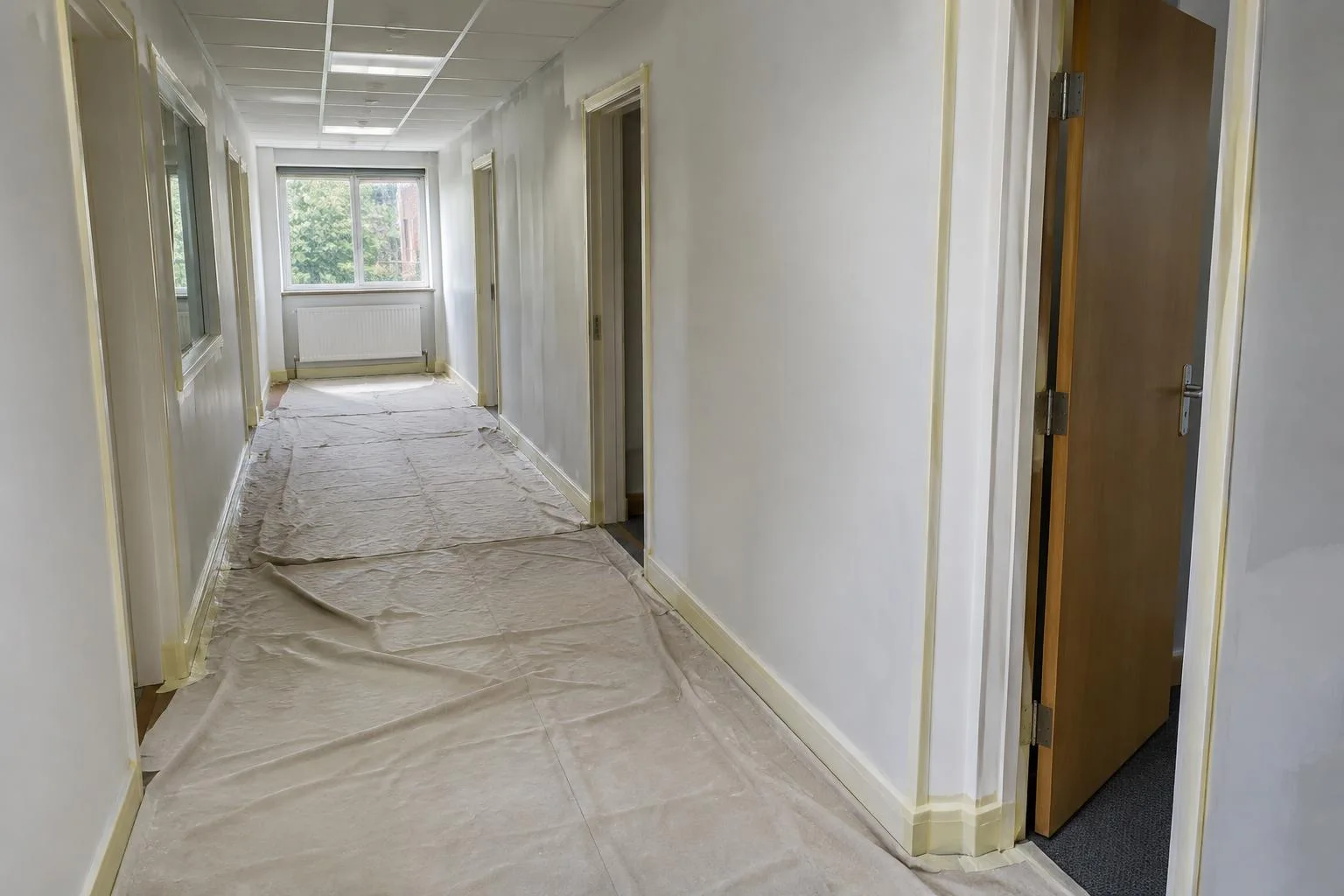
Airless application is an option for expansive walls and ceilings. It needs room to work and careful masking of areas that are not receiving paint. In a cleared space the balance between set-up and application may favour spraying. A small occupied room may make a brush and roller the more sensible choice.
Exterior commercial work also depends on access and suitable weather. Fences can be considered for airless spraying, while woodwork and trim call for their own preparation and finish. Discuss the actual surfaces rather than choosing a technique before the site has been assessed.
Defining your commercial quote
Include the number of rooms, approximate dimensions and photographs of worn or damaged areas. Tell Eric whether you are looking for a colour refresh, a change of finish or decorating as part of a wider premises update. Identify responsibility for moving stock, furniture and equipment so the scope is clear.
For public-facing areas, anti-vandal coatings may be worth a separate conversation. Landlords and managing agents may also need decorating-led property maintenance rather than a one-off full repaint. Follow the service links below or send your postcode and project details through the form.
Separate the decisions before work begins
A business repaint often sits alongside other decisions: a change in office layout, replacement furniture or a new use for an existing room. Keep the decorating brief distinct from those wider changes. If partitions or fittings are still being altered, say so before the surfaces are assessed. The final paint scope should reflect the room that will actually be used, not a layout that is about to change.
Write down the parts of the premises that are included and those that are not. Walls behind fixed shelving, doors opening into shared areas and ceiling edges can otherwise become ambiguous. A simple marked plan or annotated photograph is useful for explaining boundaries. Where a landlord or managing agent must approve a colour or finish, establish that approval before asking for the work to be scheduled.
Think about the people who control access as well as those who use the building. Keys, entry codes, shared entrances and security procedures all need a practical arrangement. A facilities manager may know the office layout but need someone else to confirm weekend access. Identifying these responsibilities early avoids basing the decorating plan on assumptions that cannot be carried through.
A specification you can refer back to
Keep a record of the colours and finishes agreed for each surface. This gives the project a clear reference and can help when future touch-ups are considered. A colour description such as light grey is not as useful as the actual selection. Equally, the appearance of an existing wall cannot always establish which coating was originally used.
If the project includes different zones, decide how their boundaries will be identified. Reception and back-office space may have contrasting needs, while a shared corridor may be governed by a different property arrangement. The decorating scope should state what is being refreshed rather than imply responsibility for the whole building. Include these points in the conversation with Eric and keep the agreed details with the quote.
Make the first enquiry specific
If you manage more than one business space, identify which premises the enquiry concerns. Include the postcode, the rooms and the person responsible for access. A clear boundary between this project and possible future work keeps the scope easier to discuss. You can also explain whether the visit needs to fit around customers, staff or deliveries. Those details help establish a practical conversation before any finish or working arrangement is selected.
Photos from Mode Decorating projects will be added here.