Consider the cabinets you already have
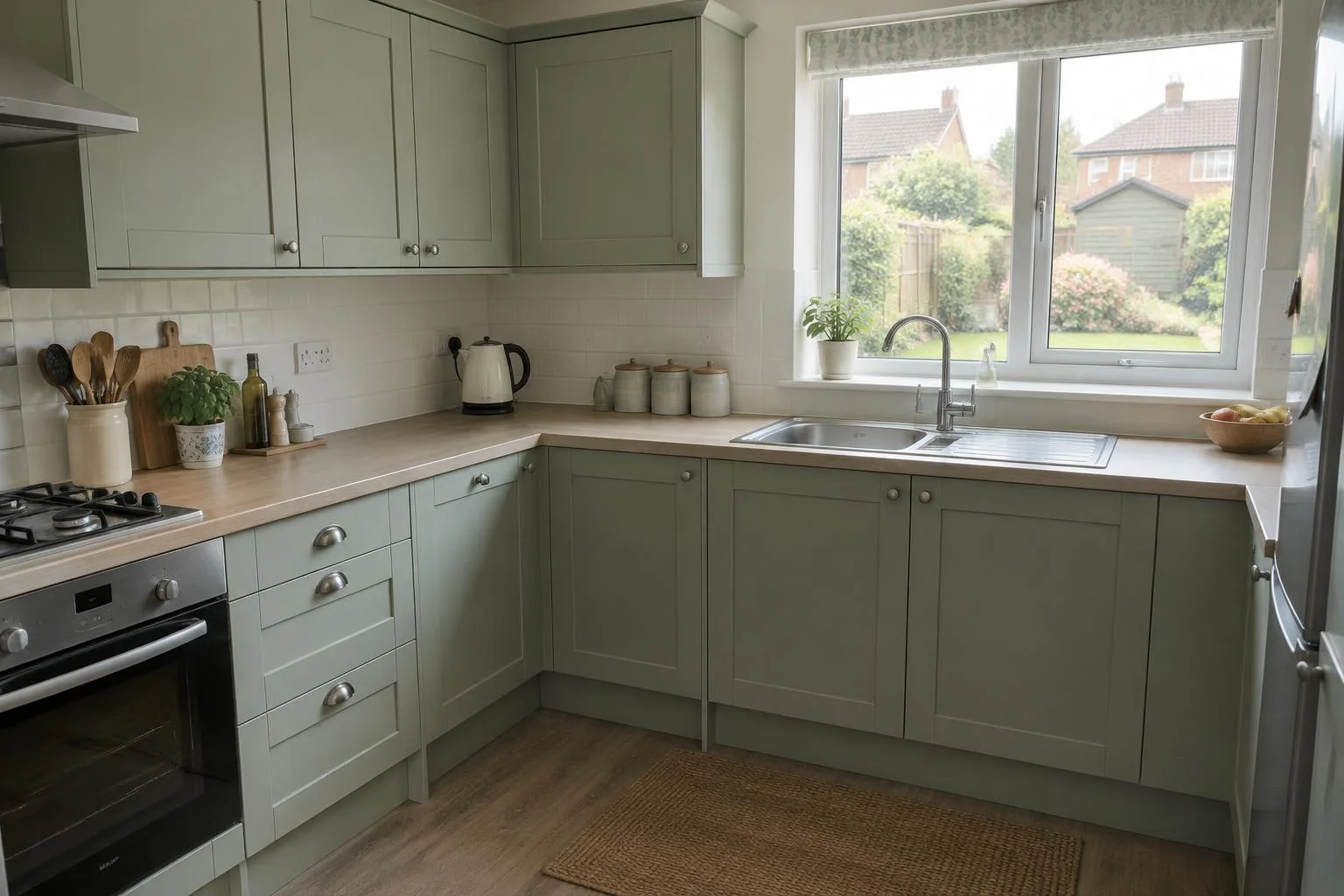
Replacing an entire kitchen is not the only way to change its appearance. HVLP spraying can be discussed as an alternative where existing units and doors are suitable for refinishing. It changes the painted finish, not the layout, storage or underlying condition of the furniture.
Look at doors, edges and areas near the sink before deciding on a repaint. Swelling, loose materials or damaged components may need to be dealt with separately. A decorating quote should distinguish a coating project from repairs or replacements that are outside the agreed scope.
Cleaning before colour
Kitchen surfaces can carry grease and residues that are less obvious than a visible stain. Cleaning is a key part of the general preparation process. The existing coating and cabinet material must be considered so the next layer is compatible with what is underneath.
Keying a suitable surface and selecting a primer may follow, depending on the assessment. Simply spraying over contamination can undermine adhesion. The preparation is part of the project even though it will not be visible once the colour is applied.
HVLP and a controlled finish
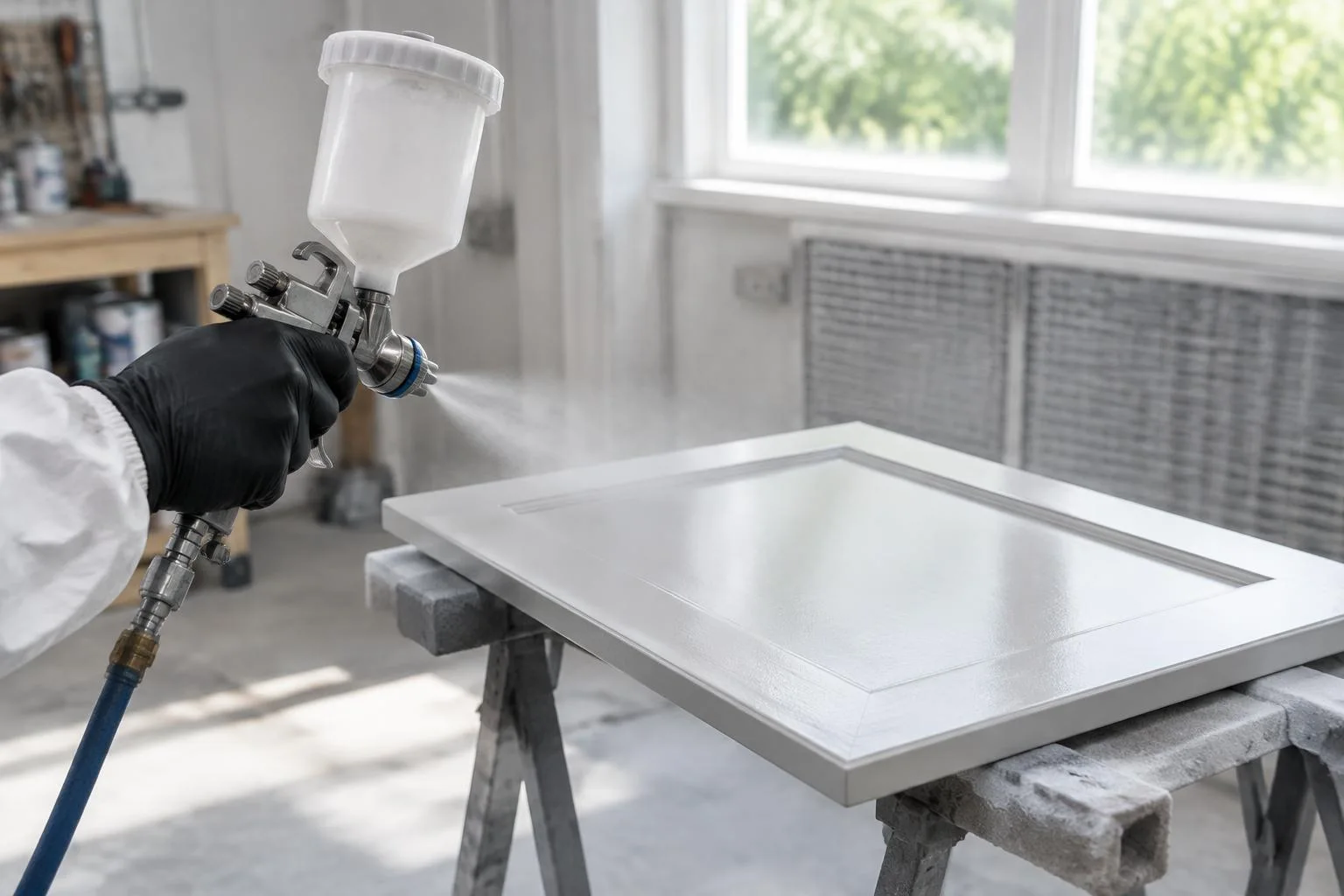
Mode Decorating uses HVLP spraying for kitchens, as well as trim, woodwork and garden furniture. A controlled spray approach is useful for working around door profiles and details. The exact work arrangement is agreed for the items involved; it should not be assumed that all doors are treated in the same way.
Surrounding surfaces, worktops and fittings must be considered in the masking plan. Ask which items can stay in place and whether anything needs to be removed. Each kitchen has different access and preparation needs.
Choosing a colour in the room
Think about the existing floor, worktop and light before selecting a cabinet colour. A shade may look different on a whole bank of doors than on a small sample. Upper and lower units can be considered together with trim and adjacent painted walls.
Sheen also changes the appearance. Talk through the finish you want and how the kitchen is used. A coating choice should account for its intended substrate and the practical demands of the room, rather than being selected solely from a colour photograph.
Planning around daily kitchen use
Kitchen access can be affected during preparation and application. Discuss cooking, storage and the use of key appliances before agreeing a schedule. There is no blanket promise that every part of the kitchen can remain usable at every stage.
Photographs of the whole room and close-ups of the doors help an initial conversation. Include the postcode and approximate number of units. For trim or garden furniture, describe the items separately so their surfaces and exposure can be assessed on their own terms.
Describe doors, panels and fixed parts separately
A kitchen contains more visible surfaces than its cupboard doors. Drawer fronts, end panels and fixed sections can have different access and preparation needs. Identify which parts you want refinished and which are staying as they are. A photograph of the whole room is useful, but close-ups of these details make the brief more precise.
Do not assume the existing finish is identical across every component. A replaced door or a previously touched-up panel may have a different surface history. If you know about earlier changes, include them in the conversation. The aim is to establish a suitable preparation plan for the actual items, rather than apply a general kitchen specification without inspection.
The condition of edges deserves attention. Areas near sinks and frequently handled doors may show wear that is less visible in an overall picture. A new paint film cannot restore a swollen or unstable component by itself. If repairs are needed beyond the decorating scope, these should be recognised before a refinishing decision is made.
A realistic plan for the room
Decide what needs to remain accessible during the project and explain that before timing is agreed. Food storage, appliances and the route through the kitchen may all affect the arrangement. There may be stages when particular surfaces or areas should not be used. Discuss these limitations instead of assuming that everyday kitchen use will continue unchanged.
Colour decisions can also involve items outside the cabinets. Existing handles, worktops and adjacent walls will influence the finished appearance. If you intend to change those separately, tell Eric which decisions have already been made. The cabinet finish can then be considered alongside the room's intended final state.
Once a coating is selected, its care instructions are relevant to later use. Application and long-term cleaning are not the same question. Ask what guidance applies to the agreed material, rather than relying on a generic claim that any sprayed surface can withstand every cleaning product. This keeps expectations tied to the specification being discussed.
Begin with the existing units
Send the kitchen details before committing to a coating. The assessment starts with the items you already have.