Respray or replace the kitchen?
If your units are solid, the layout works and the worktops are in decent condition, spraying the doors and visible panels is often a sensible alternative to a new kitchen. You keep the parts that work and change only the colour and finish. Spraying makes less sense where carcasses have swollen from water damage, doors are warped or peeling apart, or you want to change the layout anyway.
It is worth being honest with yourself about what is bothering you. If it is mainly the colour, a respray may be the answer. If drawers are failing and hinges have pulled out of the chipboard, those problems will still be there afterwards.
What drives the cost
The biggest factor is simply how much there is to spray. Every door and drawer front has two faces and four edges, and each needs preparing and coating. A small galley kitchen with a dozen doors is a very different job from a large kitchen with an island, tall larder units and a long bank of drawers.
Next come the extras: end panels, plinths, cornice and pelmets, carcass fronts that show when doors are open, and any open shelving. Deciding early whether these are included avoids surprises later.
The material matters too. Painted or bare timber and MDF take a primer and sprayed topcoat well. Laminate and vinyl-wrapped doors can often be sprayed, but they need specialist primers for the paint to bond, and wrap that is lifting or bubbling may have to be removed or repaired first. Each extra step adds time.
Preparation: degreasing, repairs and priming
Kitchens are greasy places, even clean ones. Every surface has to be thoroughly degreased before anything else, because paint will not stick properly to a film of cooking residue. After that come repairs: filling chips and dents, fixing loose edges and sanding to give the primer something to grip.
Then the right primer goes on for the material underneath. On most resprays, preparation takes as long as the spraying itself, sometimes longer. A quote that skips it is not a saving if the finish starts to fail.
Colour changes and sheen levels
Moving from one light shade to another is usually straightforward. A big change, such as dark wood to white, or white to a deep navy or green, may need extra coats for even coverage, which adds time and materials.
Sheen is partly about looks and partly about practicality. Matt and eggshell finishes are popular and hide small imperfections, while satin and higher sheens wipe clean easily but show every flaw underneath. Your choice affects how much preparation is needed for a good result.
On-site or off-site spraying
There are broadly two ways to tackle a respray. Doors and drawer fronts can be taken off and sprayed away from the kitchen, while fixed parts such as end panels and carcasses are done in place. Alternatively, everything is sprayed in the kitchen, with the room fully masked and protected.
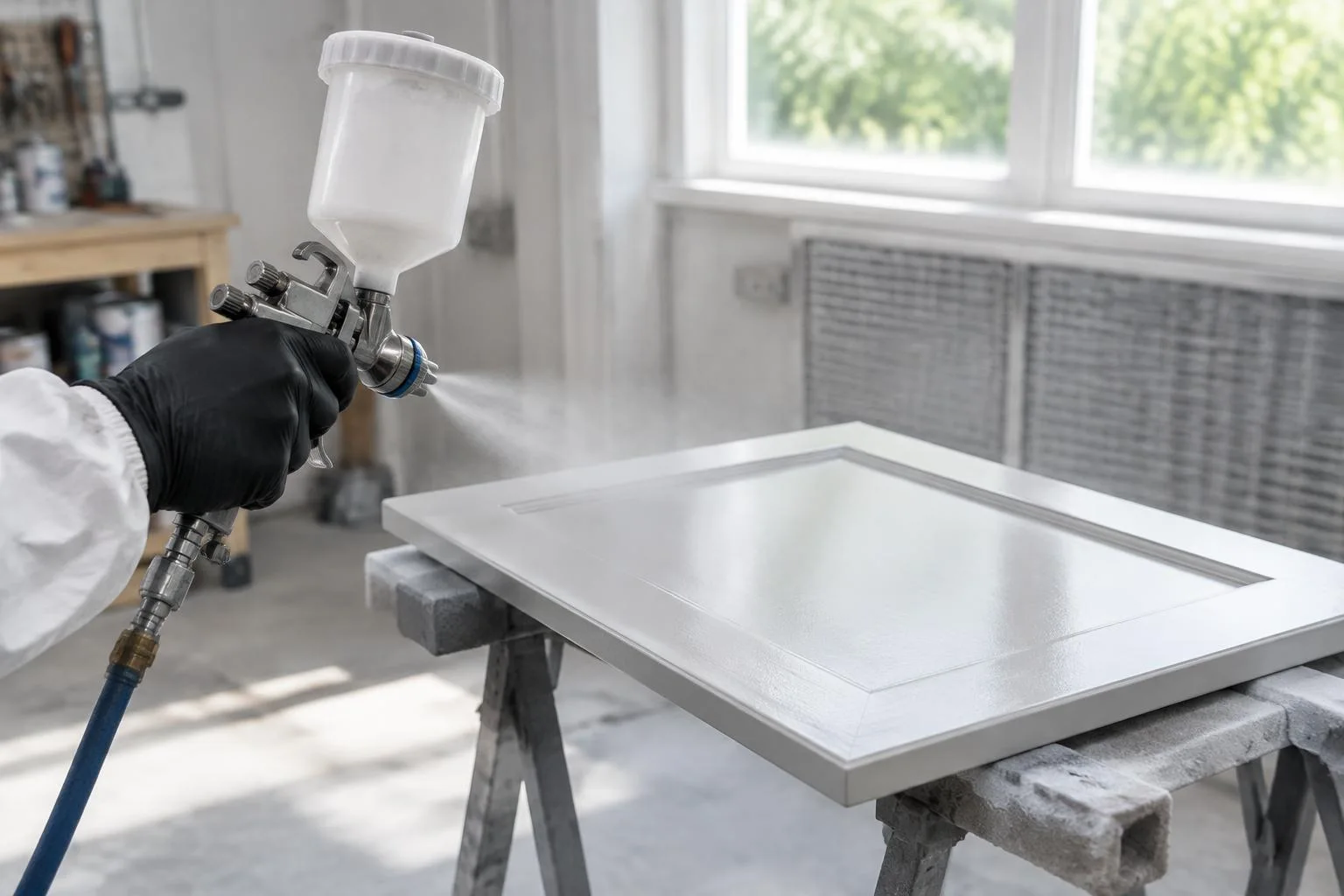
Each approach changes how long you are without a usable kitchen and how much protection is needed. HVLP spraying, which we use on cabinets and furniture, gives a fine, controlled finish with less overspray, which helps when working inside a home. The best option depends on your kitchen and household, and we talk it through at the quote stage.
Looking after a sprayed kitchen
Once the work is done, a little care keeps it looking good. Fresh paint keeps hardening for a while after it feels dry to the touch, so it is worth treating the doors gently for the first few weeks: avoid sticky tape, harsh cleaning products and slamming drawers. After that, a soft cloth and mild soapy water are all most kitchens need.
Areas near the hob, sink and bin cupboard see the most wear, so check those from time to time. A small chip is far easier to touch in early than once moisture has got behind it. If you are planning other work in the room, such as new worktops, a new splashback or tiling, try to finish it before the spraying so the new finish is not knocked or splashed straight away.
Getting an accurate quote
The most useful thing you can do is count. Note the number of doors, drawer fronts and end panels, and say whether the carcasses, plinths and cornice are included. Mention the door material if you know it, the colour you are aiming for and whether you are fitting new handles at the same time.
Photos of the whole kitchen and close-ups of any damaged doors help a lot. Mode Decorating is run by Eric Purnell from Swanley, with 20 years in the trade. Call 07872 324935 or use the contact page to arrange a look at your kitchen and a free quote.