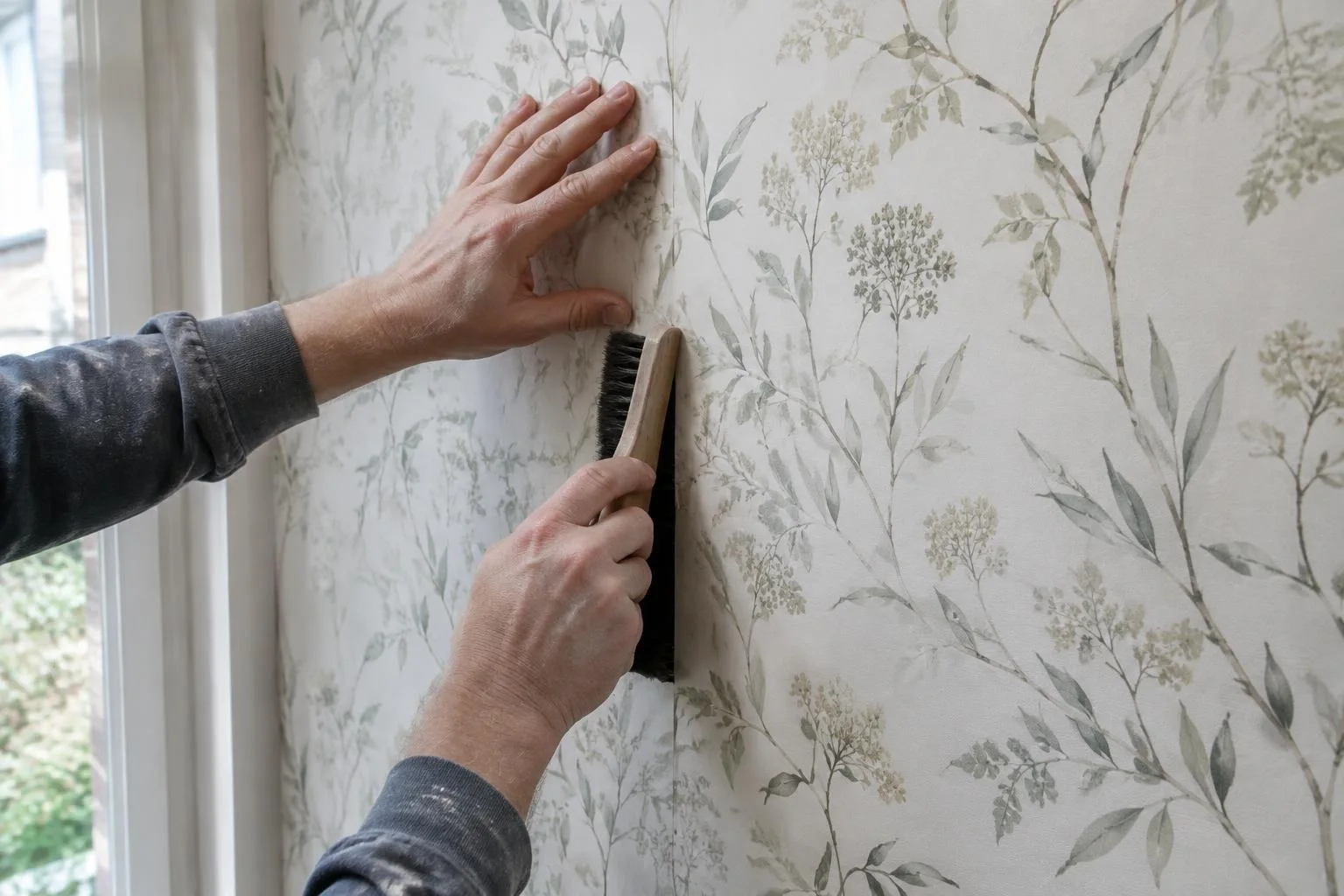
A feature wall or a complete room
Wallpaper can introduce pattern, texture or a quieter background than a painted accent. A feature wall has different layout considerations from a full room. Doorways, corners and the main view into the space affect where a pattern appears and how it meets the edges.
Mode Decorating offers wallpapering for commercial and domestic properties. Describe the rooms, the wall dimensions and the paper you are considering when requesting a quote. If the paper has already been purchased, its product details and pattern repeat are useful information.
Removing the old finish
Existing paper is not always a suitable base for a new covering. Stripping can reveal repairs or uneven areas that were hidden underneath. The condition of the plaster, adhesive residue and any loose paint should be considered before new paper is hung.
Removing a covering is also an opportunity to understand why the previous finish failed. Damp patches or persistent movement should not be concealed without addressing the cause. Preparation is discussed according to what the wall actually needs.
What lining paper is for
Lining paper may be considered to help create a more even base, depending on the substrate and decorative covering. It does not turn a damaged wall into a sound one without preparation. Repairs and removal of loose material still come first where needed.
The wall surface and the instructions for the selected paper influence the preparation and adhesive choice. Ask about these before purchasing materials in quantity, especially if you are not certain what is already on the wall.
Pattern matching and room layout
Patterned coverings have a repeat that influences both alignment and the amount of paper needed. The pattern may need to be matched across strips and around room features. This is why wall area alone is not always enough to estimate the number of rolls.
Alcoves, chimney breasts and uneven corners can affect the layout. Think about the most important view of the pattern and tell Eric about the walls that will be seen together. Keep product labels and batch information with the paper supplied.
Combining paper with painted surfaces
A wallpaper project often sits alongside ceiling or woodwork painting. Identifying the complete scope helps the sequence be planned. Say which finishes are staying and which need refreshing, rather than leaving adjacent paintwork until the paper is hung.
For business premises, include access hours and whether the space will be occupied. For homes, discuss furniture and belongings around the walls. An enquiry with your postcode, photos and paper details provides a useful starting point for a visit and quote.
Check the paper information before booking
Wallpaper instructions are an important part of planning. The product may specify how it is handled, which adhesive is appropriate and how its repeat is matched. Keep those instructions and the labels with any rolls already purchased. A picture of the pattern alone does not give the same information as the manufacturer's details.
If more paper is needed, batch information may also matter. Do not discard labels before the work has been assessed. The quantities required depend on the layout and repeat, not only the square metres of wall. Openings and corners can affect how strips are arranged, so measurements should describe the room rather than just one broad area.
Give particular attention to the main view of a feature wall. Furniture may conceal part of the pattern, while a doorway or chimney breast changes the available layout. A sketch or annotated photograph helps explain which visual centre matters to you. This is a useful conversation to have before any paper is cut.
Plan what happens around the paper
Adjacent paintwork and fittings should be considered with the hanging sequence. If ceiling or trim painting is also required, include it in the same brief. A project planned as a whole is different from adding new tasks after one finish is complete. Explain any changes to sockets, fittings or furniture that may affect the walls.
The room still needs a working arrangement even when only one wall is being papered. Access to the full height and width of the area is relevant, as are belongings that need moving away. For commercial rooms, mention who can release the space and when. For a home, identify the areas that must remain accessible during the work.