Paper is priced by the job, not the roll
It is tempting to think of wallpapering as so many rolls at so much each, but a paperhanger’s time is spent mostly on preparation, measuring, cutting and matching. Two rooms needing the same number of rolls can take very different amounts of work. The factors below explain why.
Stripping the old paper
If there is existing paper on the walls, it usually needs to come off. Some papers peel away easily; others, especially old layers that have been painted over, need scoring, soaking or steaming and patient scraping. Stripping can damage weak plaster underneath, which then needs repair. Painted-over paper and several layers stacked on top of each other add the most time.
Wall condition and lining paper
Wallpaper shows every bump and crack beneath it, particularly plain or shiny papers. After stripping, walls are filled, sanded and sized so the paste grips properly. Uneven or patched walls often benefit from lining paper first, hung horizontally so its joints do not line up with the finishing paper. Lining adds another stage of hanging and drying, but it gives a far better base and helps the final paper last.
The paper you choose
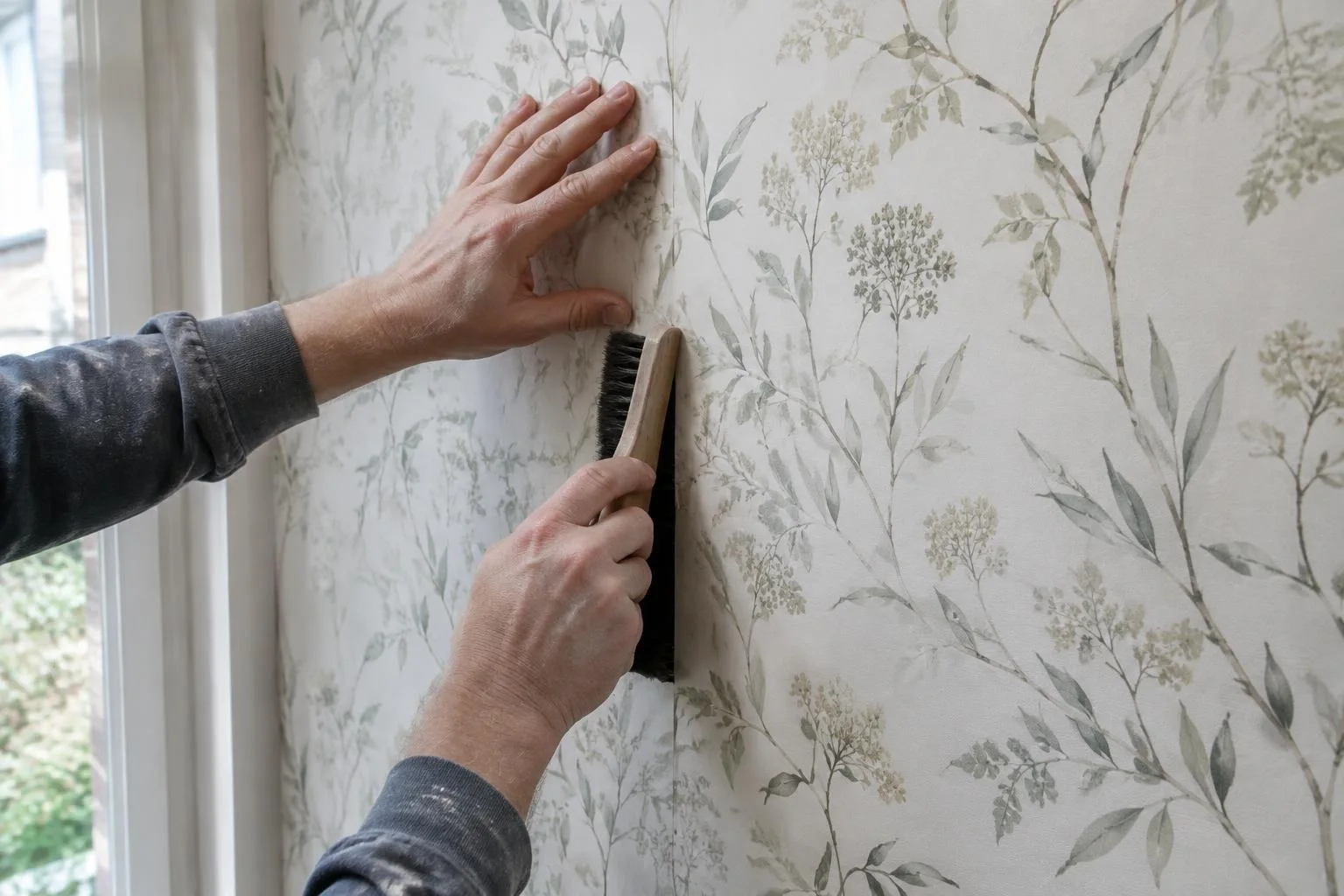
The paper itself affects how long hanging takes. A plain or random design is quickest. Patterned papers with a large repeat need careful matching at every seam, which uses more paper and more time. Heavy vinyls and textured papers are harder to handle and cut cleanly. Paste-the-wall papers can be quicker to hang than traditional ones. Murals arrive as numbered panels that must be positioned precisely, and delicate or specialist papers such as grasscloth demand very careful handling to avoid marks.
A feature wall or the whole room
A single feature wall is a smaller job than papering a full room, but it is not always proportionally cheaper. Set-up, protection, preparation and clear-up still take time, and the pattern has to be centred carefully on a focal point such as a chimney breast. Whole rooms involve more corners, doors, windows and switches to cut around, each of which needs precise trimming.
Ceilings and stairwells
Papering a ceiling means working overhead from boards or platforms, often with two people to support long lengths. Stairwells are the most demanding area of all: very long drops, awkward angles where the wall meets the stairs, and access equipment that has to be set up safely over the steps. Both add considerably to the time involved.
Who supplies the paper?
Many people choose and buy their own paper. If so, ask your decorator to measure first, so enough rolls from the same batch are ordered. Different batches can vary slightly in colour, and running short mid-wall can leave a visible change. Your decorator should allow for pattern repeat and waste in the quantity.
Awkward rooms and obstacles
Every switch, socket, radiator, window and door means careful cutting and trimming. Radiators may need to come off the wall, which should be done by someone qualified if the system needs draining. Chimney breasts, alcoves, sloping ceilings in loft rooms and out-of-square corners all slow the work down, because each length needs to be adjusted so the pattern still looks straight. A small room full of obstacles can take longer than a larger, plain one.
Kitchens and bathrooms
Rooms with steam and splashes need papers designed for them, usually washable vinyls, and a suitable adhesive. Areas directly behind sinks, hobs and baths are often better tiled or painted, so the paper only goes where it will last.
Finishing touches
Some people combine wallpaper with painted woodwork or a painted ceiling in the same visit. Doing it all together saves set-up time, and the paint colours can be chosen to suit the paper.
Lining and painting instead
If a wall is badly uneven, some people decide to hang lining paper and paint it rather than use a decorative paper at all. It can be a practical middle ground, giving smoother walls without the cost of a premium paper. Our guide to painting over wallpaper looks at that choice in more detail.
Getting a clear quote
When you ask for a quote, say what is on the walls now, which walls you want papered, and share the paper’s details if you have chosen it, including the pattern repeat. Photos of the room help.