The short answer
Sometimes. Paint can go over wallpaper that is firmly stuck, smooth and designed to be painted, such as good lining paper. It tends to go wrong on vinyl, heavily patterned, glossy or loose paper. The condition of the paper and the wall under it matters more than anything else.
When painting over paper can work
Lining paper that was hung well, with tight seams and no bubbles, is made to be painted and usually takes emulsion very well. Plain, matt papers that are well stuck all over can often be painted too. Textured papers such as woodchip and anaglypta were also made with painting in mind, although many people now prefer smooth walls. Run your hand over the wall and press the seams: if everything feels solid and flat, painting is worth considering.
When it tends to fail
Vinyl and other wipeable papers have a plastic surface that paint struggles to grip, so it can peel or scratch off easily. Loose seams and edges lift further when wet paint soaks into them. Bubbles are common: the water in emulsion softens the paste, and the paper swells and lifts in patches. Some bubbles flatten as they dry, others do not. Strong patterns, dark colours and metallic inks can show through or bleed into light paint, needing several coats or a primer. Old paper hung over damp or crumbling plaster will carry those problems with it.
Test a small patch first
Before committing to a whole room, paint a small area in a hidden spot, such as behind a sofa, and let it dry fully. Check for bubbling, lifting seams, patterns showing through and how well the paint grips. A scratch test with a fingernail once dry gives a rough idea of adhesion. If the patch fails, the full wall will too.
Stripping instead
Stripping takes longer up front, but gives you a clean start and lets you see the plaster underneath. Paper is scored, soaked or steamed and scraped off, then the walls are washed to remove old paste. Plaster under old paper is often patched or uneven, so filling and sanding usually follow. Old plaster can come away with the paper in places, which then needs making good before painting.
Lining paper as a fix
If the walls are rough, cracked or patched after stripping, lining paper is a good way to get a smooth surface ready for paint. It is hung horizontally or vertically, depending on the finish wanted and whether wallpaper will follow, and then painted once it has dried. It helps hide minor imperfections that paint alone would show, and is common on older walls where replastering would be a much bigger job.
Woodchip and textured papers
Woodchip was hugely popular for covering uneven walls and is often found in older homes, painted many times over. It can be painted again if it is sound, but many people want rid of it. Removing woodchip is slow because the layers of paint stop water getting through, so it needs scoring and steaming. The plaster underneath is often in poor condition, which is why it was papered in the first place.
Kitchens, bathrooms and hallways
Painting over paper is riskiest in steamy rooms, where moisture can soften the paste over time and seams can lift. In kitchens and bathrooms, stripping and painting straight onto plaster, or using a paper suited to humid rooms, is usually more reliable. Hallways take a lot of knocks, so loose edges there tend to tear.
Preparing papered walls for paint
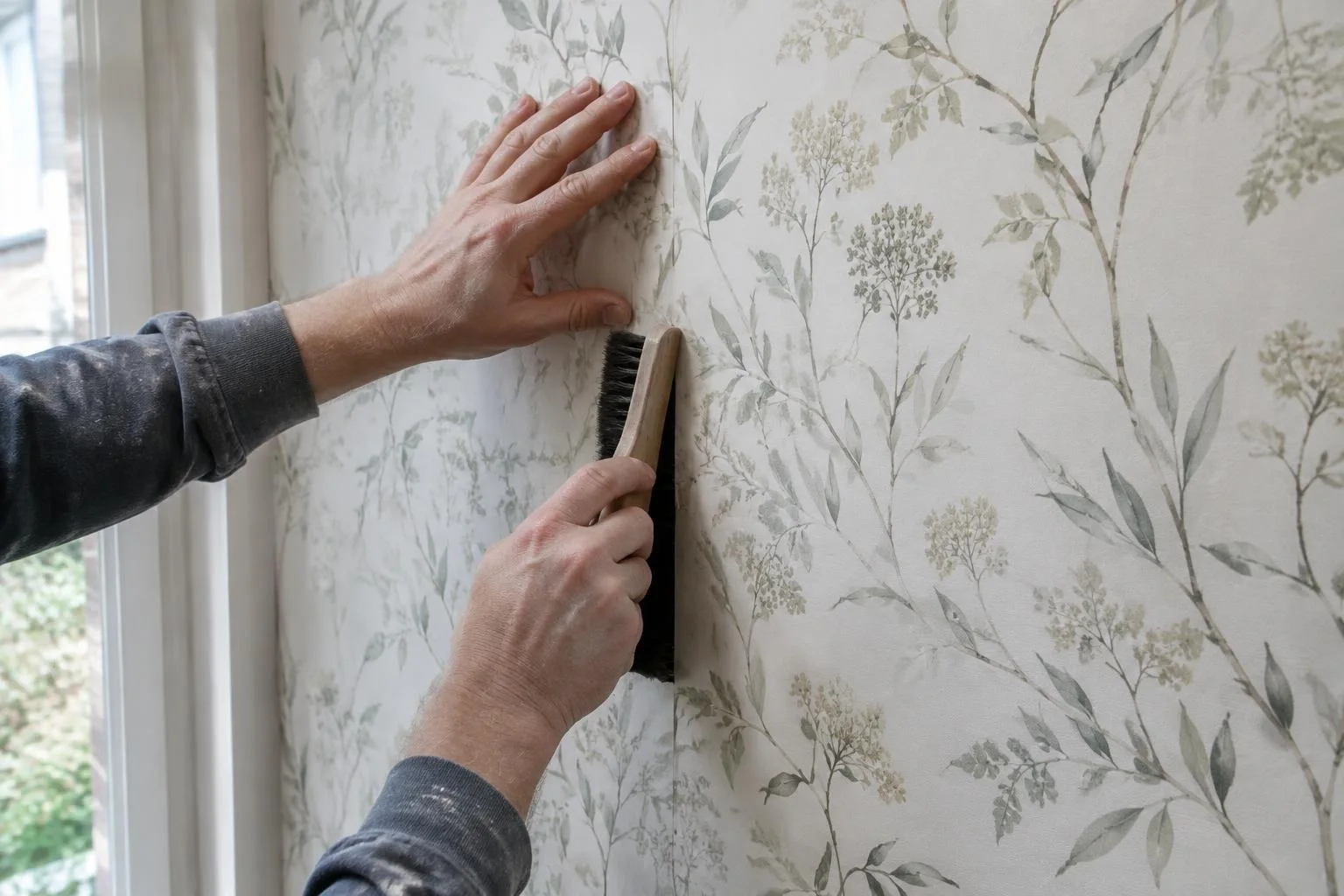
If you do go ahead, check every seam and stick down any loose edges with a suitable adhesive, then let it dry. Fill small tears and sand lightly. Wipe the wall to remove dust. A primer can help the paint grip and stop inks bleeding through. Apply thin coats and let each one dry, rather than one heavy coat that soaks the paper.
What it means for the next redecoration
Painted wallpaper is harder to strip later, because the paint stops water reaching the paste. If you think you may want to paper again or replaster in future, weigh up whether painting now will make that job harder.
Getting the walls right
If you are not sure whether to paint, strip or line, we can look at the walls and suggest the best route. Our wallpapering page covers stripping, lining and hanging. Call Eric on 07872 324935 or use the contact page.