Two techniques with different purposes
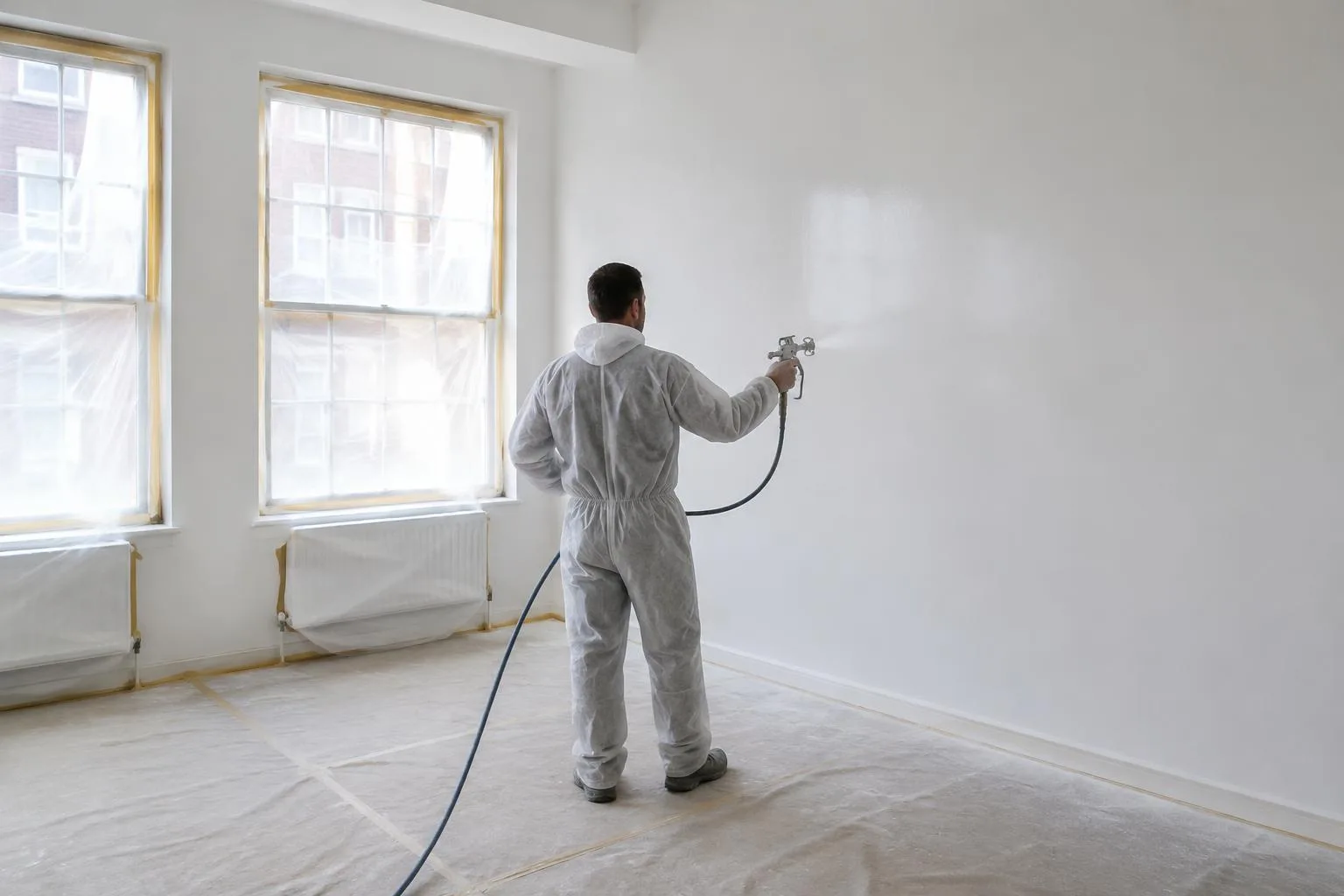
Spray painting is not one interchangeable process. Airless equipment moves paint under pressure and is commonly used on broad surfaces. HVLP means high volume, low pressure and is suited to more controlled application on smaller or detailed items. The equipment, material and preparation must suit the job.
Mode Decorating offers airless spraying for ceilings, walls and fences, and HVLP spraying for trim, woodwork, kitchens and garden furniture. Traditional brush and roller painting remains part of the service. Having several options allows the application method to be discussed in relation to the property.
Airless application on larger areas
A broad ceiling or long uninterrupted wall may make airless spraying worth considering. The size of the area is only one factor: access, obstructions and the ability to mask neighbouring surfaces also matter. In a furnished space, preparation can account for a substantial part of the work.
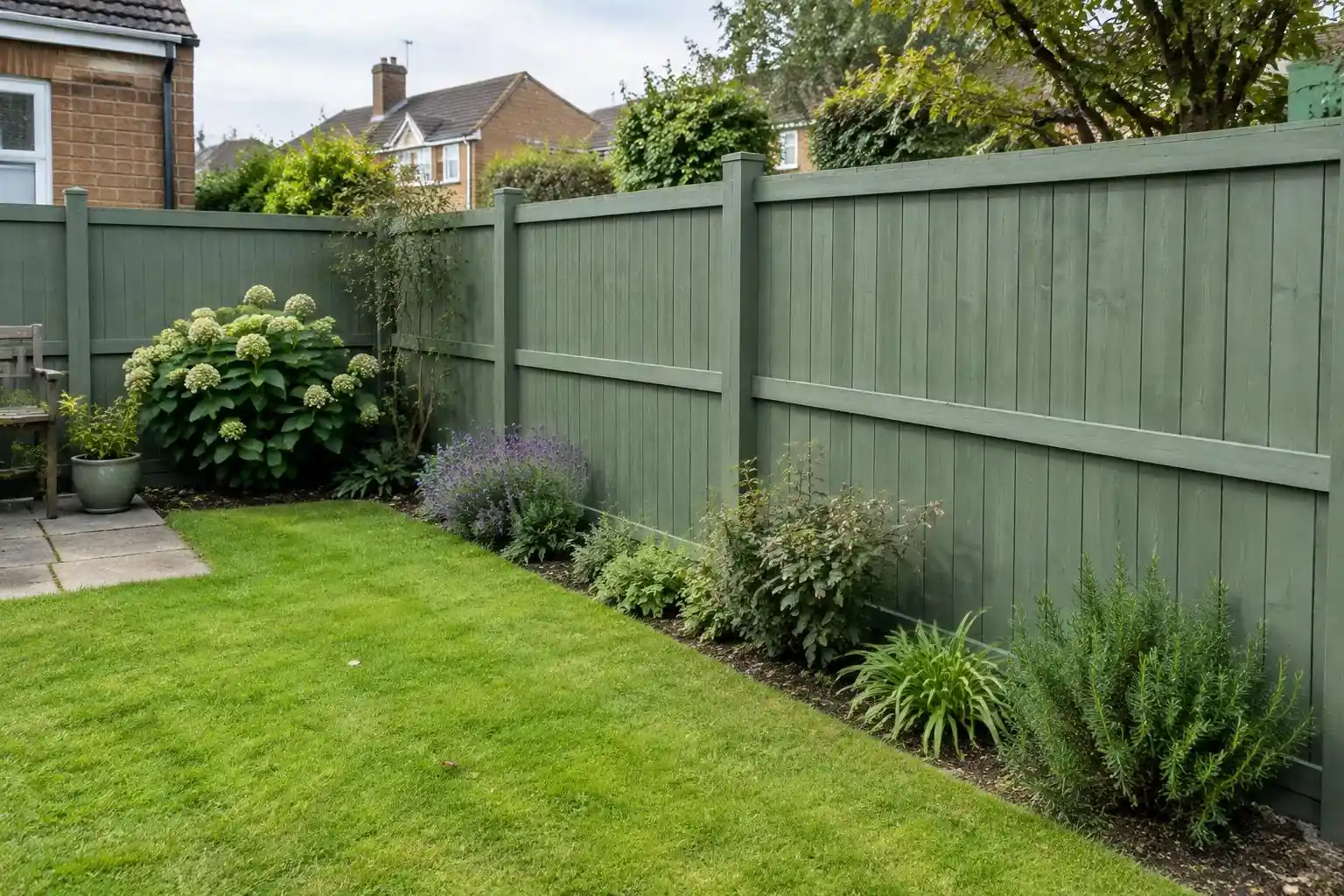
Fences have their own layout and exposure. Both the fence and nearby surfaces need to be considered before spraying outdoors. The condition beneath the new coating still matters, whether the material is applied by spray or another method. Spraying does not repair a failing surface by itself.
HVLP for trim, kitchens and furniture
Fine detail and changes in direction can favour a more controlled spray process. HVLP can be considered for painted kitchen units, trim and other woodwork. Cleaning, keying and priming are part of assessing a suitable preparation sequence; the existing finish and material influence the choice.
Garden furniture is another service area. Ask about the specific item rather than assuming every material will accept the same coating. A colour change, a different sheen or a move from an existing finish may alter the preparation needed. Detailed pieces also require attention to edges and less visible areas.
Masking is part of spray painting
Paint in a spray pattern needs to be kept away from everything outside the agreed scope. Floors, glass, fixtures and adjacent surfaces require thought before application begins. Masking takes time and needs to be accounted for when comparing techniques.
A room that can be emptied is a different proposition from one containing fixed furniture or occupied workstations. Ask how the work area will be arranged and which items need to be moved. Good planning makes the set-up practical; it is not simply a matter of bringing a spray gun into a room.
When brush and roller makes more sense
A small isolated repair, a single furnished room or a surface with many interruptions may not justify the masking required for spraying. Brush and roller application can also be easier to organise where only part of a space is available at a time.
Neither technique is automatically cheaper or better. Compare the complete task: preparation, protection, application and the finish being requested. The spraying-versus-brush guide sets out these trade-offs without treating one method as a universal answer.
Describe the surfaces, not just the technique
For an enquiry, say what you want painted and where it is: office ceiling, house walls, kitchen doors, trim, fence or furniture. Add the postcode, approximate size and photographs where possible. Explain whether the space can be cleared and if other work is taking place.
That information gives Eric a starting point for deciding whether airless, HVLP or traditional painting is appropriate. Kitchen spraying has its own page for a closer look at units and preparation. Office managers can also read about ceiling work and working arrangements on the office painting page.
Look beyond the flat area
A surface can look simple in a photograph while containing details that matter for spray application. Recesses, returns and nearby fittings change where paint is intended to go. When sending pictures, show edges and junctions as well as the centre of the wall. This helps describe the work without assuming that all the visible area is one uninterrupted surface.
The surrounding space matters too. A large wall in a narrow corridor is different from a wall of the same size in an empty room. Access for working, the position of fixed items and the boundaries of the area must be considered together. The appropriate method depends on these practical details as well as the dimensions.
If only part of a room is being repainted, make that boundary explicit. The ceiling, adjacent walls, frames and fixtures may be staying unchanged. Masking must be planned against the actual scope, not a general assumption that the whole room is receiving paint. A clear description of included and excluded surfaces is useful at the quotation stage.
Compare complete project arrangements
Ask about spraying in the context of the whole project. A method suitable for a cleared office ceiling does not establish the best approach for an occupied kitchen or a detailed piece of furniture. Equally, a technique that is practical indoors may need a different assessment outdoors. The surface, material and conditions have to be considered for each part of the work.
The requested finish is another part of that discussion. Spraying describes application, not a universal specification for sheen, colour or use. Choosing a suitable coating and preparing its substrate remain separate decisions. No tool makes every paint appropriate for every surface, and no application method removes the need to follow the selected material's instructions.
If a project combines broad surfaces with finer woodwork, describe both. Eric can discuss airless, HVLP and traditional painting according to what is present. A combined brief does not mean every item must be finished with the same equipment. Start with what you want painted and leave the method open to the assessment.
Photos from Mode Decorating projects will be added here.