What airless spraying is
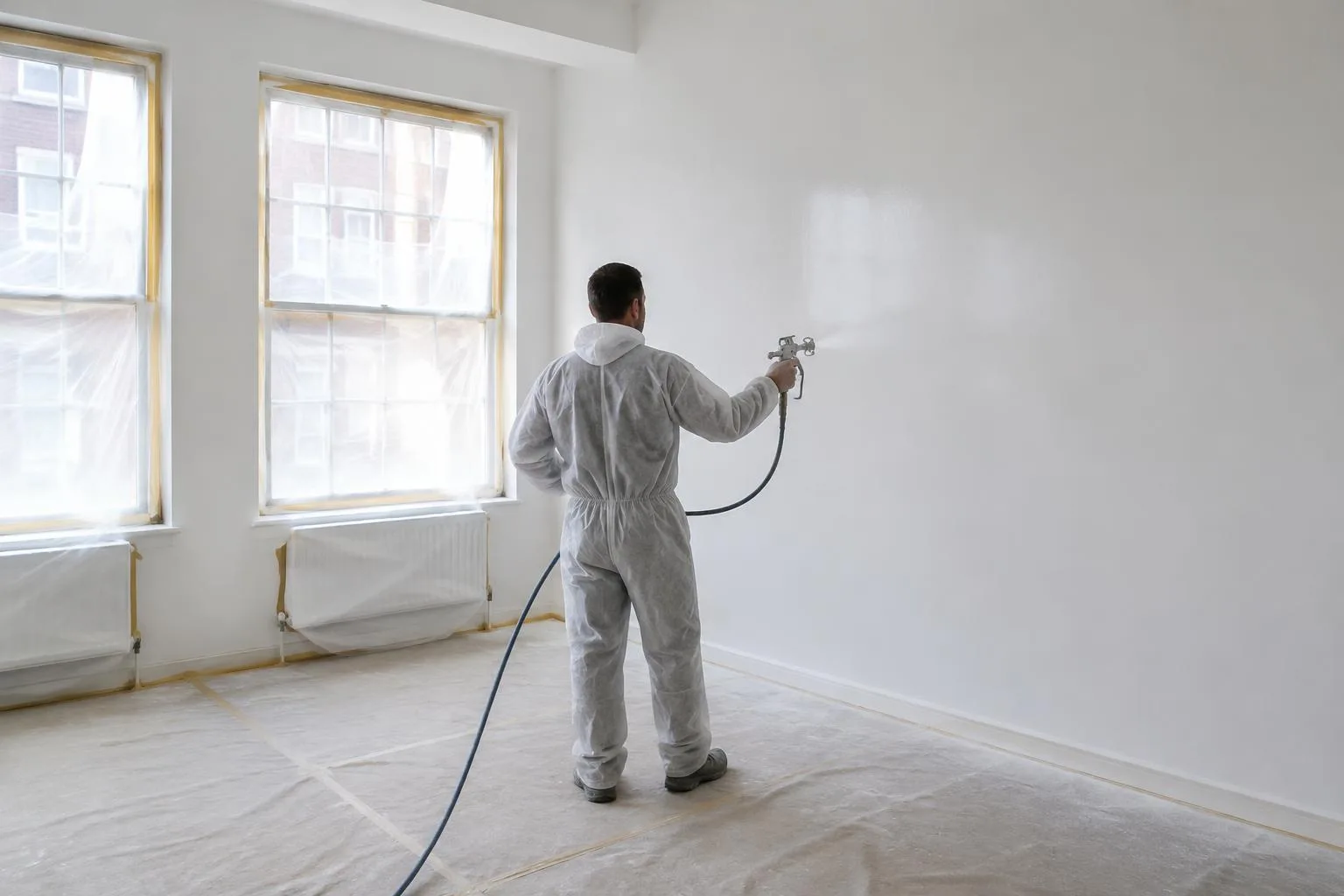
An airless sprayer uses a pump to push paint at high pressure through a very small tip. The pressure breaks the paint into a fine fan without any compressed air, which is where the name comes from. Because it can move a lot of paint, it covers big areas far faster than a roller and lays down an even film without roller marks or patchy laps.
Where it earns its place
Airless spraying suits large, open surfaces that can be cleared and masked. Typical examples are big ceilings, the walls of an empty office floor, new-build houses and flats before the furniture arrives, warehouse and industrial walls, and long runs of fencing. On new plaster it can apply the first sealing coat quickly. On a high ceiling it can save a lot of time spent on towers.
Masking and overspray control
The real work in airless spraying happens before the trigger is pulled. Everything that is not being painted gets covered: floors, windows, light fittings, sockets, sprinkler heads and anything else in the room. Fine mist can drift, so adjoining rooms are sealed off and the area is kept ventilated. Outside, wind direction matters, and cars, plants and neighbours’ property are protected or moved. Tip size and pressure are matched to the paint and the surface to keep overspray down.
Back-rolling for a better finish
On many surfaces we follow the spray with a roller while the paint is still wet. This is called back-rolling. It works the coat into porous or rough surfaces, such as new plaster or masonry, and evens out the texture so the wall matches areas that were rolled by hand. Whether it is needed depends on the paint and the finish you want.
When brush and roller is better
Spraying is not always the answer. In a furnished room, the time spent masking can outweigh the time saved painting. Small rooms, patch repairs, cutting in around detailed woodwork and offices that are busy with staff during the day are often quicker and tidier by hand. Our guide to spraying versus brush and roller goes into this in more depth.
Ceilings and high walls
Large ceilings are where airless spraying saves the most effort. Rolling a big ceiling from a tower is slow and tiring, and roller marks can show when light from the windows falls across it. A sprayed coat goes on evenly in long passes. The same applies to tall walls in stairwells, atriums and warehouse units, where access is the hardest part of the job. Our ceiling painting page covers stains, textured ceilings and other ceiling issues.
New builds and empty properties
An empty new-build house or flat is close to ideal for spraying. There is no furniture to protect, the fresh plaster needs a first sealing coat and every room can be done in sequence. Developers, landlords and people moving into a new property often choose spraying for this reason. Woodwork such as doors and skirting is normally done separately, either by brush or with HVLP equipment.
Paints and finishes for spraying
Most emulsions and many trade paints can be sprayed, though some need thinning slightly and others are made specifically for spray application. The tip and pressure are set to suit the paint. A sprayed coat can be a little thinner than a rolled one, so the number of coats is planned for the surface and colour. We follow the paint maker’s guidance for each product.
Spraying outside
Outdoors, an airless sprayer is mostly used for long fences and large plain walls. Calm, dry weather is essential, as even a light breeze can carry mist onto cars, windows and plants. On a windy day we switch to brush and roller or rebook.
Planning an airless job
For a smooth job, rooms need clearing, there needs to be power and space for the equipment, and we need a clear run of time. In offices this often means working evenings or weekends by arrangement so the floor is empty. Eric will look at the space on a visit and tell you honestly whether spraying will help. Call 07872 324935 or use the form on this page.