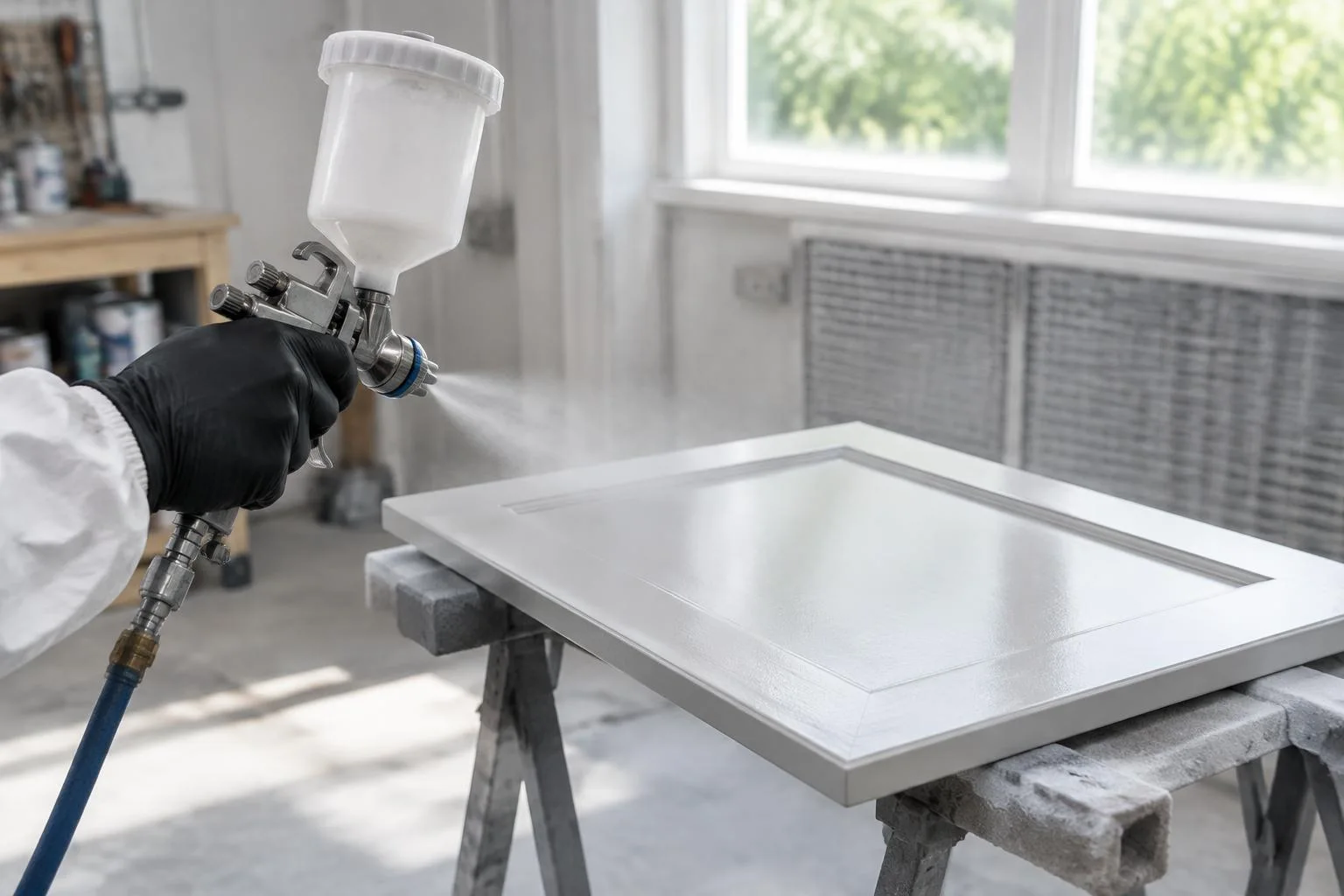
What HVLP actually is
HVLP stands for high volume, low pressure. Instead of forcing paint through a tiny tip at very high pressure, an HVLP system uses a large flow of air at low pressure to break the paint into a fine, gentle mist. The spray is softer and more controlled, with far less bounce-back from the surface. More of the paint lands where it is aimed, and less drifts around the room as overspray.
The trade-off is speed. An HVLP gun puts down paint more slowly than an airless machine, so it is not the right choice for a whole warehouse wall. Where it shines is on detailed or smaller items that need a high-quality finish.
Where we use it
We use HVLP for trim and woodwork such as doors, architraves, panelling and spindles; for kitchen cabinet doors, drawer fronts and end panels; for built-in furniture and shelving; and for garden furniture. Panelled and moulded items benefit most, because the fine spray coats recesses and edges evenly where a brush tends to leave runs, ridges and thick corners.
HVLP or airless?
Airless spraying uses a high-pressure pump and a large output, which makes it ideal for broad walls, ceilings and fences once everything nearby is masked. HVLP is the precision tool: lower output, finer atomisation and better control near edges. On many jobs we use both, for example airless on the ceilings and walls of an empty room, then HVLP on its doors and frames. Brush and roller still has a place too, especially for cutting in and short runs of fixed skirting. Our airless spraying page explains the other side of the comparison.
Preparation comes first
Spraying shows up every flaw underneath, so preparation decides the result. Surfaces are cleaned and degreased, which matters most in kitchens where cooking grease builds up on cupboard doors. Existing finishes are sanded to give the new coat something to grip, dents and open joints are filled, and bare or tricky surfaces such as laminate, melamine or old varnish get a primer suited to them. Dust is cleared away before any paint goes on, as specks are easy to see in a sprayed finish.
Paint is prepared to suit the gun, following the maker’s guidance, so it flows evenly without sagging.
Masking and protection
Low overspray does not mean no overspray. Worktops, floors, glass, handles, hinges and anything else nearby are masked or removed before spraying. Where it gives a better finish, doors and cabinet fronts are taken off, labelled and sprayed in a protected area, then refitted once dry. Ventilation is kept up while we work.
Drying and handling
A sprayed coat may feel dry quickly, but it takes longer to harden fully. Kitchen doors and furniture should be treated gently for a while afterwards, and hinges are not over-tightened onto fresh paint. Garden furniture needs a dry, mild spell so the coating can cure outdoors. We will explain how long to wait before normal use for the paint we are applying.
Choosing a sheen
HVLP can apply finishes from flat matt to high gloss. Satin and eggshell are popular on doors and trim because they hide small knocks and wipe clean. Gloss looks traditional but shows every flaw beneath it. On kitchens, a durable satin or matt furniture paint is a common choice. We can show you what each looks like before you decide.
Kitchens are a common HVLP job
Respraying a kitchen is one of the most popular uses of HVLP. Doors and drawer fronts are removed and sprayed in a protected area, while fixed panels and plinths are masked and sprayed in place. Our kitchen spraying page covers this in more detail.
Is HVLP right for your job?
If you have doors, cabinets, spindles or furniture that you want looking crisp and factory-smooth, it probably is. Send photos and a rough count of items, or call Eric on 07872 324935.