Weather off the river
Gravesend sits right on the Thames, with Shorne marshes to the east and Swanscombe marshes to the west. Homes and businesses that face the river or stand on open ground catch more wind and driving rain than those tucked further inland. Exterior paint on these elevations works harder, and window sills, fascias and render on the weather side usually show wear first.
A good exterior here depends on preparation: washing off grime and growth, scraping back loose coatings, filling cracks in render and priming bare timber. We then choose a masonry or exterior wood paint suited to an exposed position, and book the work for a settled spell so each coat can dry.
King’s Farm and the interwar streets
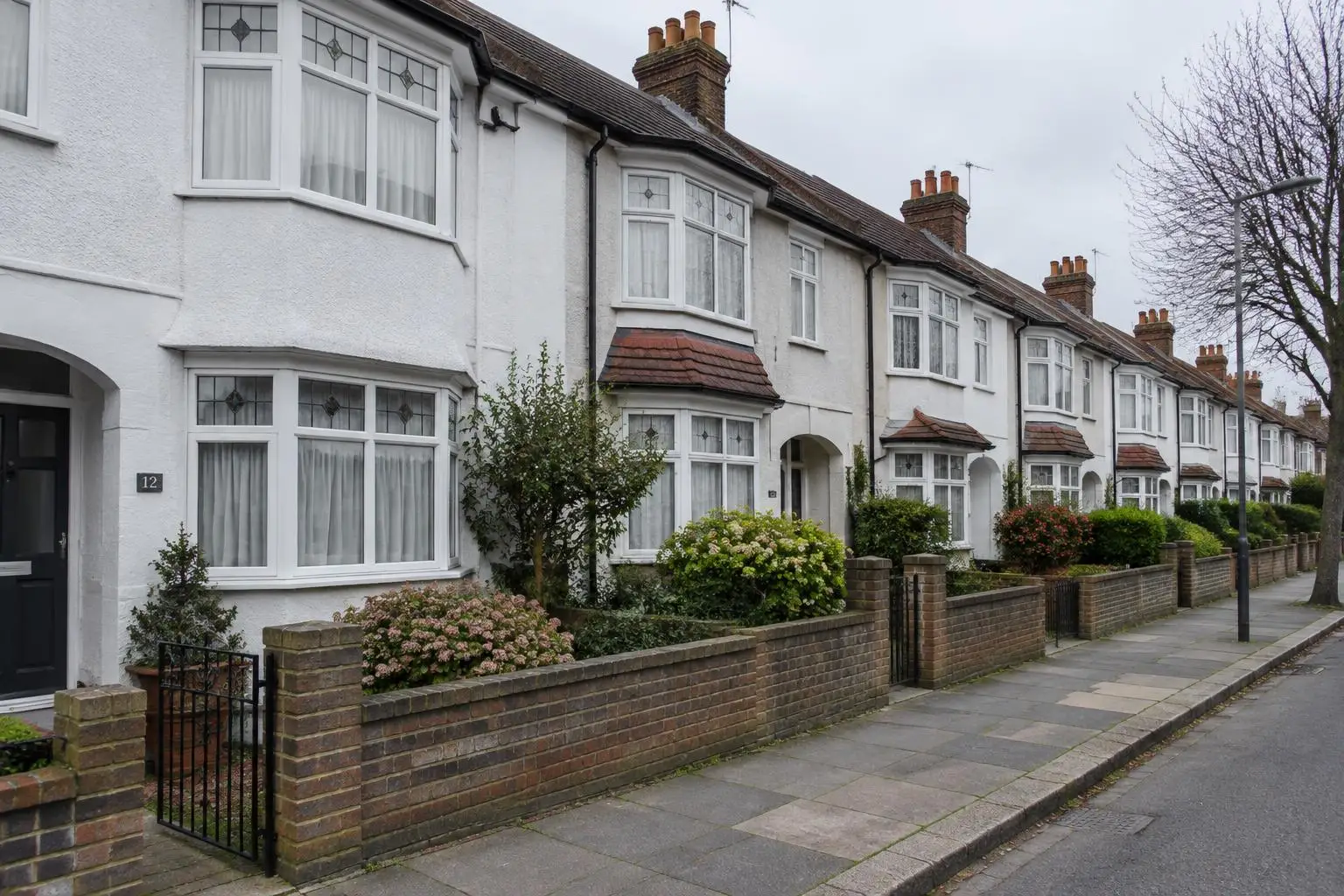
Much of the town is terraced; across Gravesham borough, 30.0% of homes are terraces. King’s Farm, built mostly in the 1920s, and the post-war estates around it give large parts of Gravesend a consistent look of bay fronts, rendered or pebble-dashed elevations and painted timber. Rendered fronts can be refreshed in a fresh colour once cracks are filled and the surface sealed. Inside, these homes tend to have practical room sizes that suit a whole-house redecoration done room by room.
Ready for the next tenant
About 19.1% of homes across the borough are privately rented. When a tenant leaves, a landlord or agent usually wants the property back on the market quickly. We can decorate empty rentals with neutral, hard-wearing finishes, block any stains before painting, and freshen doors and skirting so the property photographs well.
Shops and the town centre
St Georges and Thamesgate shopping centres, along with the high street shops around them, keep the centre busy. Retail units can be decorated in sections or outside trading hours by arrangement. Offices, our main service, are planned in a similar way so staff can carry on working.
Landmarks and character
The riverside has some of the town’s best-known structures, including Royal Terrace Pier and the Town Pier, both Grade II listed, and the clock tower on Milton Road. Older properties near the river and in the town centre may have character worth keeping, so we take care to match existing colours and finishes where owners want to keep the look. If a building is listed, check with the council before changing it.
Inside interwar homes
Houses from the 1920s and 1930s often keep picture rails, original panelled or glazed doors, and bay windows with wide boards beneath them. Ceilings may be plaster rather than plasterboard and can show fine cracks that need filling before painting. Many have been altered over the years, with knocked-through rooms and new plaster beside old. Matching the finish across these different surfaces takes a little extra preparation, but it makes the room look like one space again.
Timber on the weather side
Fascias, soffits, bargeboards and timber bay windows on the most exposed side of a house usually need the most attention. Sound timber is sanded and primed where bare; soft or rotten sections should be repaired by a joiner before we paint. A good exterior wood paint then protects it.
Colours for rendered terraces
Along a terrace, a front that suddenly stands out can look odd, so many owners choose whites, creams or soft greys that sit comfortably beside the neighbours. If you want something bolder, it is worth seeing a sample patch on the wall in daylight first.
Commuters and access
Plenty of residents travel to work on High Speed 1, so homes are often empty during the day. That can make decorating easier, provided key arrangements are clear. Gravesend is within our working area of up to 40 miles from Swanley. Call Eric on 07872 324935 or send your postcode through the form.