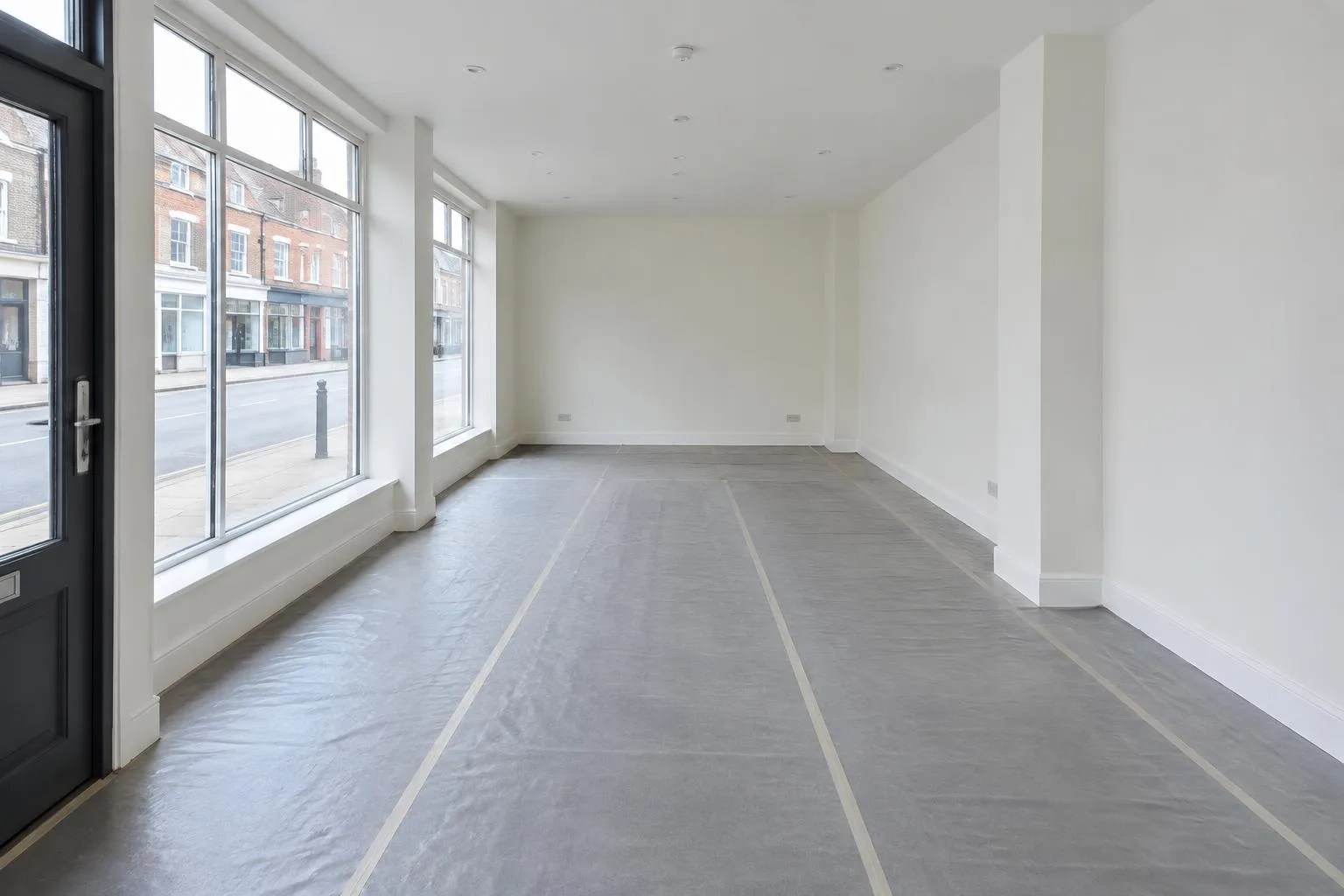
Floors we can discuss
We can talk through floor painting for warehouses, workshops, garages, plant rooms, stores and back-of-house corridors in commercial buildings, where the floor and its use make a coating suitable. Every floor is different. A garage that sees a car each evening is a very different job from a store with pallet trucks running across it all day, so the first step is understanding what the floor has to put up with.
Preparation decides the result
Most floor coating failures start with what was underneath. Oil, grease and tyre marks have to be removed with a degreaser, because paint will not bond to them. Old coatings that are flaking come off. The surface then needs a mechanical key, which usually means abrading or grinding the concrete so the coating has something to grip. Cracks, chips and holes are repaired before any coating goes on. Leaving out any of this is the usual reason a painted floor starts lifting within months.
Checking for moisture first
Concrete can hold a lot of moisture, especially a newer slab or a floor without a damp-proof membrane. If moisture keeps coming up from below, it can push a coating off. We check the floor before recommending a product and, where there is doubt, talk through further testing before any work is booked.
Epoxy and other floor paints
Floor coatings range from single-pack floor paints, which can suit lighter use, to two-part epoxy systems that are mixed on site and cure to a much harder film. There are also options with an anti-slip texture added. Which one makes sense depends on the traffic, any chemicals or spills, how slippery the floor can safely be and how long the area can be closed. We will explain the choices in plain terms rather than pushing one product.
Line marking and colour zones
Walkways, bay markings, hazard edges and pedestrian routes can be discussed as part of the job. Think about where people walk, where trucks go and whether any areas need to stand out, and bring a rough sketch to the visit if you can.
Walls, kerbs and plinths around the floor
Floors rarely stand alone. Machine plinths, kerbs, the bottom of walls and steel columns are often painted at the same time, so the floor and its edges look finished together. A hard-wearing band at the base of walls, where trolleys and pallets catch, can be discussed alongside the floor. Colour can also separate areas, such as a lighter walkway against a darker working zone, or a highlighted edge at the top of a ramp or step.
Keeping the building working
Coating a floor takes that area out of use, and the smell from some products needs managing. We look at which zones can be done in turn, where stock and equipment can move to and how the space will be ventilated. In shared buildings, neighbouring units and the landlord may need to know in advance. Planning this early avoids surprises on the day.
Curing time and keeping areas closed
A floor coating needs time to harden. There is usually a period before it can take foot traffic, a longer one before wheeled traffic, and a longer one again before it reaches full hardness. Temperature makes a real difference, as cold floors cure slowly. We plan the closure with you, often over a weekend or shutdown, and agree how the area will be kept clear. Call Eric on 07872 324935 to arrange a look at the floor.