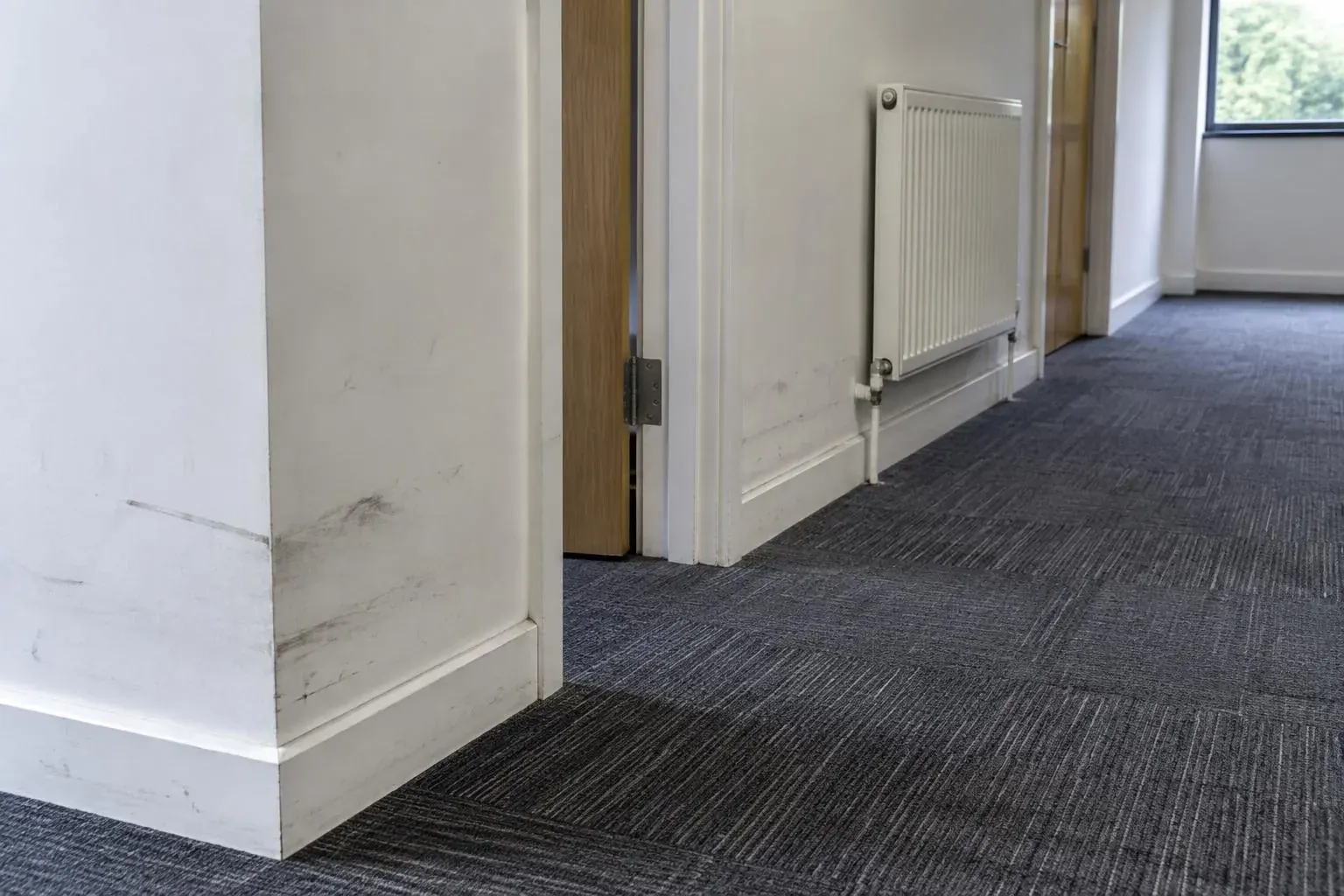
Look at the routes people use most
Start at the reception and follow the paths staff and visitors take through the office. Scuffing around doorways, chair contact beside desks and repeated marks at corridor corners can reveal where finishes are working hardest. Compare those locations with quieter rooms rather than judging the whole building from one damaged patch. A single scrape might need a local assessment, while widespread wear may justify discussing a broader repaint. Record the rooms and surfaces where the pattern repeats. Photos taken at a normal viewing distance are useful alongside close details, because they show how noticeable the wear is in the actual workplace rather than exaggerating it through a tightly cropped image.
Corridors and shared kitchens tell a different story
Corridors and connecting spaces and staff kitchens often receive more frequent contact than a boardroom wall. Food splashes, marks beside bins and handling around switches can affect the appearance even when surrounding paint remains sound. Cleaning instructions for the existing finish should be checked before aggressive treatment is attempted. If cleaning does not restore an acceptable appearance, ask about the condition and a suitable next coating. Include doors, frames and skirting in the survey: worn trim can make a newly painted wall look disconnected from its surroundings. Describe what has happened to the surface rather than prescribing a product before it has been assessed.
Colour changes can be about function as well as age
A faded-looking finish, mismatched repairs or a scheme that no longer suits the organisation may be reasons to plan work even without widespread damage. Light can alter the perception of colour, so inspect sample ideas in the rooms where they will be used. A rebrand might involve only selected walls, or it might change the relationship between reception, meeting areas and circulation routes. Decide which surfaces carry the new identity and which remain neutral. Keep decorative decisions separate from signage or other installations that may require another trade. Treat painting as one part of the rebrand, with its own surfaces, colours and practical arrangements to agree.
New tenants need an agreed starting condition
Before an incoming occupier moves furniture into a space, it can be useful to assess the existing decoration. The opportunity for clear access may change once desks, equipment and storage arrive. A landlord and tenant should clarify who commissions the work and which surfaces belong in that agreement. Photograph the starting condition and record whether existing fixtures stay, move or are removed. Do not assume that a handover automatically requires every room to be painted. A well-defined scope identifies the actual changes needed and the person authorised to approve them. Property maintenance and commercial decorating can be discussed, but repairs beyond decorating should remain distinct responsibilities.
Prepare for inspections without covering up defects
An inspection or review may focus attention on visible wear, but a new coat should not conceal a building problem. Damp patches, peeling layers or cracking need their cause considered before a finish is selected. Keep records of previous leaks or repairs available for the assessment. Repainting is not a substitute for meeting the inspection requirements or dealing with the underlying problem. Ask which areas genuinely require attention and what other work may need to happen first. If an inspection date is fixed, share it early without assuming a schedule can be guaranteed before preparation and access have been reviewed.
Make a room-by-room painting list
Make a simple room list with separate entries for walls, ceilings and woodwork. Add brief notes such as scuffed corner, patch repairs or colour change wanted, and identify any unknown material history. This is more informative than saying the office looks tired. Distinguish necessary work from optional changes so the conversation can address priorities. Include approximate dimensions if available, but do not treat floor area as the paintable quantity. Partitions and ceiling heights can make similarly sized offices quite different. The office cost guide explains how surfaces, preparation and access affect a quote; the service page covers planning the work around your premises.
Plan around the people still using the premises
Establish which rooms can be cleared at the same time and which routes must remain available. Meetings, public opening hours, deliveries and security procedures affect the working arrangement. Furniture and equipment need a clear plan for moving or protection, with responsibility assigned rather than assumed. Phasing may be worth discussing when the business cannot clear the whole space. If evening or weekend access would help, discuss it with Eric and agree the arrangements for your project. Consider when staff can return as a separate question from when application ends. The coating’s drying and care requirements still apply, whichever tool is used to put the paint on the surface.
Choose the next step from the evidence
If the survey shows only isolated marks, explain that rather than requesting a full-building repaint automatically. If wear is widespread or a tenant change creates an opportunity, ask for the relevant rooms to be assessed together. Include photographs, postcode, occupancy information and any approval requirements in the enquiry. Eric can discuss office painting alongside traditional brush and roller work or airless spraying where appropriate. The method depends on the surfaces and working conditions, not just their size. Read the office timeline guide before setting expectations about dates, and use the contact page to describe your own premises rather than relying on a generic office example.