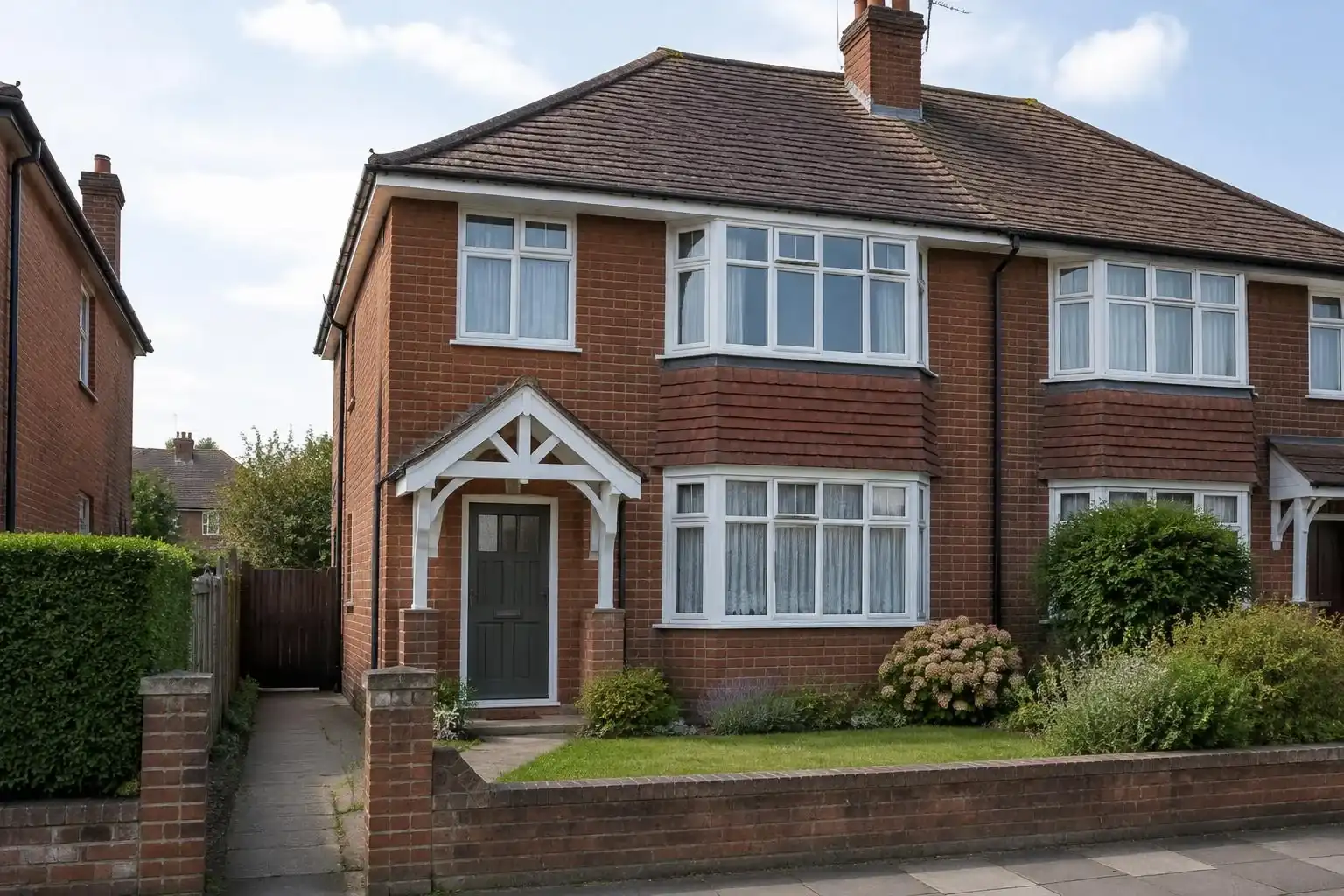
What an exterior repaint covers
A full exterior repaint usually means the walls, if they are rendered, pebble-dashed or already painted, plus the woodwork: fascias, soffits, bargeboards, window frames and sills, doors and door frames, and sometimes porches, gates and garage doors. Gutters and downpipes may be included too.
Not every job covers all of this. Some homeowners only want the woodwork done, others just the front elevation. Being clear about what is included is the first step towards comparing quotes fairly.
Size, height, access and surface type
Bigger houses take longer, but height often matters more than floor area. A bungalow can largely be painted from the ground or a short ladder, while a three-storey townhouse needs towers or scaffolding for safe access to the upper walls and roofline. Access equipment, and the time to put it up and take it down, is part of the cost.
Surface type plays a part too. Smooth render is quick to coat. Pebble-dash and textured finishes take more paint and more effort to cover properly. Bare brick is not usually painted at all, but previously painted brick needs the right masonry paint and careful preparation. Conservatories, extensions and narrow side passages that are awkward to reach all add time.
Preparation and repairs: the biggest variable
Preparation is where costs vary most from one house to the next. A wall that has been well looked after might just need washing down and minor filling. One that has been neglected may need loose paint scraped off, cracks raked out and filled, green algae treated and bare patches primed.
Woodwork is similar. Sound timber is sanded and painted. Soft or rotten sections need dealing with before any paint goes on, because painting over rot only hides it for a short while. A decorator who looks closely at the condition before quoting is far more likely to give you an accurate figure than one who quotes from the pavement.
Paint systems and how long they last
Outdoor paint works as a system: a primer or stabiliser suited to the surface, followed by undercoats and topcoats. Masonry paints for walls and exterior gloss, satin or microporous paints for timber are each made for different conditions.
How long a finish lasts depends on the preparation, the products, how exposed the house is and how it is looked after. A wall facing full sun or prevailing weather will age faster than a sheltered one. We explain which products we would use and why, rather than promise a set number of years.
The best time of year to paint outside in Kent
Exterior paint needs dry surfaces and suitable temperatures to cure properly. In Kent that generally means late spring through to early autumn, avoiding frosty mornings, heavy dew and very hot afternoons on sun-facing walls. Rain shortly after painting can spoil a fresh coat.
Because the weather is unpredictable, exterior jobs are usually booked with some flexibility. It is worth getting quotes over winter or in early spring so your job is in the diary before the busy months. Good preparation can be done on cooler days, but the topcoats need settled weather.
Maintenance between repaints
A little upkeep stretches the life of an exterior finish. Clearing gutters stops water spilling down walls and staining render. Washing down green patches on north-facing walls, trimming back climbing plants and keeping soil and planters away from the base of walls all help the paint last longer.
Woodwork is usually the first thing to show wear, especially window sills and the bottom of doors. Touching in small cracks or bare spots before water gets in can save a much bigger repair later. Walking round the house once a year, ideally after winter, is an easy way to catch problems early.
If your property is in a spot that attracts graffiti or rough treatment, such as a side wall facing a footpath, a specialist anti-vandal coating on the most exposed area can be worth discussing alongside the main repaint.
Getting a written quote
To get a quote you can rely on, ask for it in writing and check it lists exactly what is covered: which walls and elevations, which woodwork, the preparation and repairs included, the number of coats and how access will be provided. Anything left vague is where costs can change later.
Mode Decorating is based in Swanley, Kent, with 20 years trading and a working area of up to 40 miles. We come and look at the house before quoting. Call Eric Purnell on 07872 324935, Monday to Friday 8am–6pm or Saturday 9am–2pm, or request a quote online.