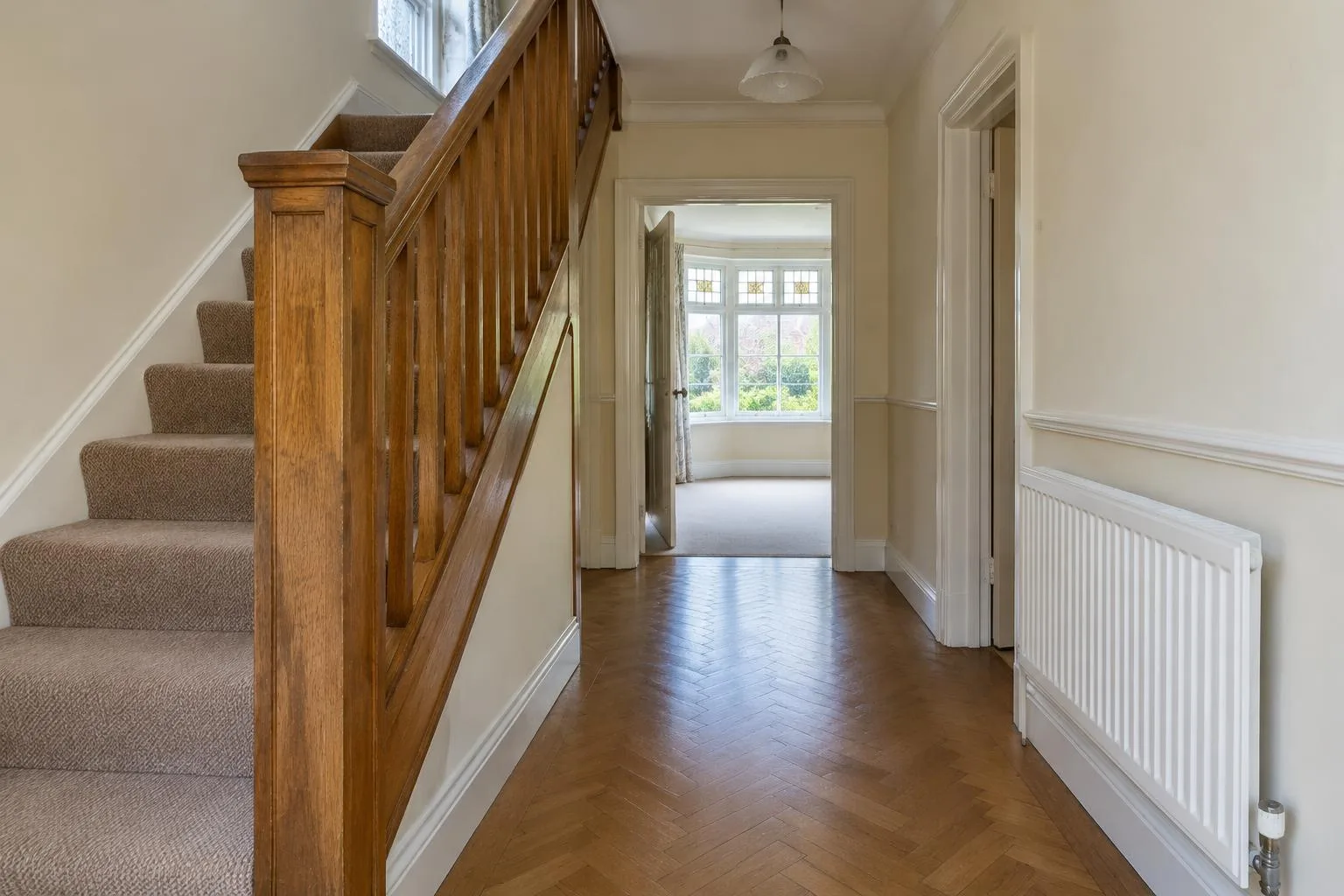
One job, from front door to landing
Hallway, stairs and landing are one continuous space, so they look best decorated together. Painting the hall but leaving a tired landing in view up the stairs rarely works. Doing it as one job also means the high stairwell wall is only set up for once. We can include the ceilings, walls, doors, skirting and the staircase itself, or just the parts you want.
Spindles, handrails and newel posts
Spindles are slow to paint well. Each one has edges, curves and joints with the handrail and base rail, and drips are easy to miss. They are sanded, filled where split, and primed where bare. Handrails are touched every day, so they need a finish that is hard-wearing and fully dry before use. Newel posts and caps often have the heaviest wear. We can paint the lot, or keep a timber handrail and paint the spindles, which is a popular look.
Reaching the top of the stairwell
The wall above the stairs is often the tallest in the house. Reaching it safely means proper access equipment, which might be a stair ladder, a small platform or boards, depending on the shape of the stairwell. We look at the layout on the visit and bring the right kit, so the ceiling and top of the wall get the same care as the parts you can reach.
Finishes for the busiest route in the house
Hallways take bags, bikes, pushchairs, shoes and pets, so a washable, scuff-resistant wall finish is usually worth having. On woodwork, satin or eggshell is often chosen as it wipes clean and hides small marks better than high gloss. If you are thinking of painting the stair treads or risers, we can talk about suitable hard-wearing paints and how that will look against a runner or carpet.
Keeping the stairs usable
Most families need the stairs while the work is going on. We plan the order so there is always a way up and down, for example painting spindles or treads in alternate halves, and keeping one side of the handrail free until the other is dry. Dust sheets on the stairs are fixed so they do not slip. Let us know about children, pets or anyone who finds stairs difficult, and we will plan around them.
Moving from varnish to paint
Many staircases are varnished or stained pine. Painting over it is very common, but varnish is slippery for new paint, so it is sanded to take the shine off and coated with a primer that bonds to it. Old timber can also release stains or resin through light colours, which a suitable primer helps to stop. If you want to keep some wood showing, we can discuss which parts to leave.
Doors and woodwork in the hall
Hallways usually have more doors opening off them than any other space, plus the front door, meter cupboard and understairs cupboard. These carry a lot of the look, so they are normally painted with the hall. If they are being sprayed, we can arrange it so rooms stay accessible. The door spraying page explains how that works.
Colours for halls and stairs
Hallways often have little natural light, so colour can change how the space feels. Lighter shades on the upper walls with a deeper, more practical colour below a dado rail is a classic way to hide marks at hand and bag height. White spindles with a darker handrail, or the reverse, are both popular. Trying sample patches in the real light helps before deciding.
Treads, risers and carpets
If a runner or carpet is going down after the decorating, the timing matters. Painting before the new carpet goes in avoids sheeting it and means any exposed treads can be finished properly. If the carpet is staying, we protect it and mask the edges carefully. Painted treads need longer to dry than other woodwork before they are walked on.
Booking your hallway and stairs
Tell us whether the hall, stairs and landing are all included, and send a photo looking up the stairwell. Call Eric on 07872 324935 or use the form on this page.