Why there is no single answer
Two houses with the same number of bedrooms can be very different jobs. One might need a light refresh in similar colours, the other might have cracked ceilings, yellowed gloss and a colour change in every room. That is why this guide does not give sample figures. It explains the things a decorator looks at when pricing, so you can understand a quote and plan your budget.
House size and number of rooms
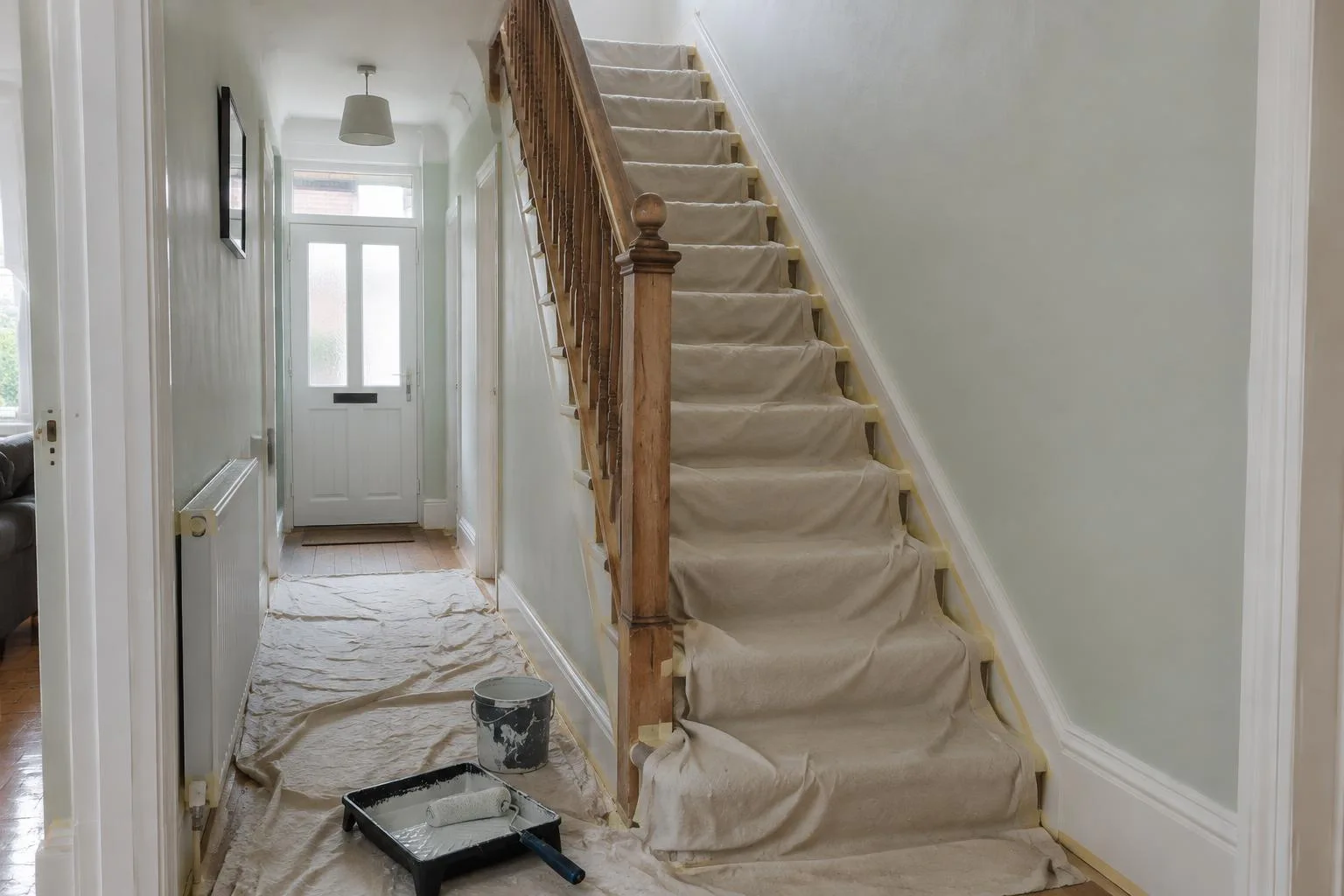
More rooms means more walls, ceilings and woodwork, but room count is only part of it. Ceiling height matters, as tall Victorian rooms take far more paint and time than a modern box room. Open-plan spaces can be quicker per square metre but need careful planning. Hallways, stairs and landings are often the slowest part of the house because of the height and amount of woodwork.
Ceilings and woodwork
Deciding whether ceilings and woodwork are included makes a big difference. Ceilings mean extra masking, moving furniture and working overhead. Woodwork, meaning doors, frames, skirting and radiators, is detailed and slow, particularly if old gloss needs sanding and priming before a new finish. A quote for walls only will look very different from one for a full redecoration, so be clear what you want.
Condition and repairs
Preparation is usually the biggest variable. Cracks, holes from shelves and pictures, damaged corners, flaking paint, stains and old wallpaper all need dealing with before painting. Walls that only need a light sand and a wipe are quick. Walls that need filling, sanding, refilling and spot priming take much longer. Damp or mould should be sorted out first, which can add time if the cause has only just been fixed.
Colour changes
Going from one similar shade to another usually needs two coats. Big changes, such as dark to light or covering strong reds and greens, often need an extra coat or a primer. Several different colours in one room, feature walls and sharp lines between colours also add time for cutting in.
Furniture, and whether the house is empty
An empty house is the easiest to decorate: everything is reachable and nothing needs protecting except floors and fixtures. In a lived-in home, furniture has to be moved, covered and put back room by room, and the household needs to keep using the house. Clearing small items, pictures and ornaments yourself before the decorator arrives saves time.
Doing it all at once or in phases
Doing the whole house in one go is usually the most efficient, as set-up and clear-up happen once and colours can be planned together. Many people prefer to decorate a few rooms at a time to spread the cost and disruption. That is perfectly workable; it just means a little more set-up across the visits.
Paint choice and quality
Trade paints and premium ranges vary in coverage, durability and how well they wash. A better paint can cover in fewer coats and last longer on busy walls, but costs more per tin. Ask which paint is planned, and whether a different choice would suit kitchens, hallways and children’s rooms better.
Access, parking and practicalities
Things outside the rooms affect a job too. Parking near the house, stairs with no lift in a block of flats, and restricted working times in some buildings can all add time. Let the decorator know about these at the start.
Kitchens, bathrooms and smaller rooms
Small rooms are not always quick. Kitchens and bathrooms involve lots of cutting in around units, tiles and fittings, and often need washable or moisture-suited paints. A small bathroom can take longer than a larger, plain bedroom.
Deadlines and timing
Some times of year are busier than others, and a fixed deadline, such as moving in or a family event, may limit when the work can be scheduled. Mention any deadline early so the work can be planned around it.
Making the most of your budget
If budget is tight, prioritise the rooms that matter most and the preparation, as good prep helps the finish last. Some people clear rooms and remove old paper themselves to save time. Ask the decorator which jobs you could sensibly do in advance.
Exterior work at the same time
If you are also thinking about the outside of the house, mention it when asking for an interior quote. Outdoor work depends on the weather, so it is often scheduled separately, but one visit can cover both.
Getting a written quote
A good quote lists each room, what is included, preparation, number of coats and the type of paint. To get one, list the rooms, mark which ceilings and woodwork are included, note any repairs or colour changes, and send photos if you can. We can then visit and give you a written quote. Mode Decorating is based in Swanley and travels up to 40 miles. Call 07872 324935 or use the contact page.