Why the answer is “it depends”
Ask a decorator how long a room will take and you will probably hear “it depends”. That is not dodging the question. The time a room needs is decided by how much preparation it requires, which surfaces are included, how many coats each needs and how quickly the paint dries in that room. Once those are known, a decorator can give you a realistic plan. If you are planning work in an office rather than a home, our guide to how long it takes to paint an office looks at phasing and working around staff.
Preparation versus painting
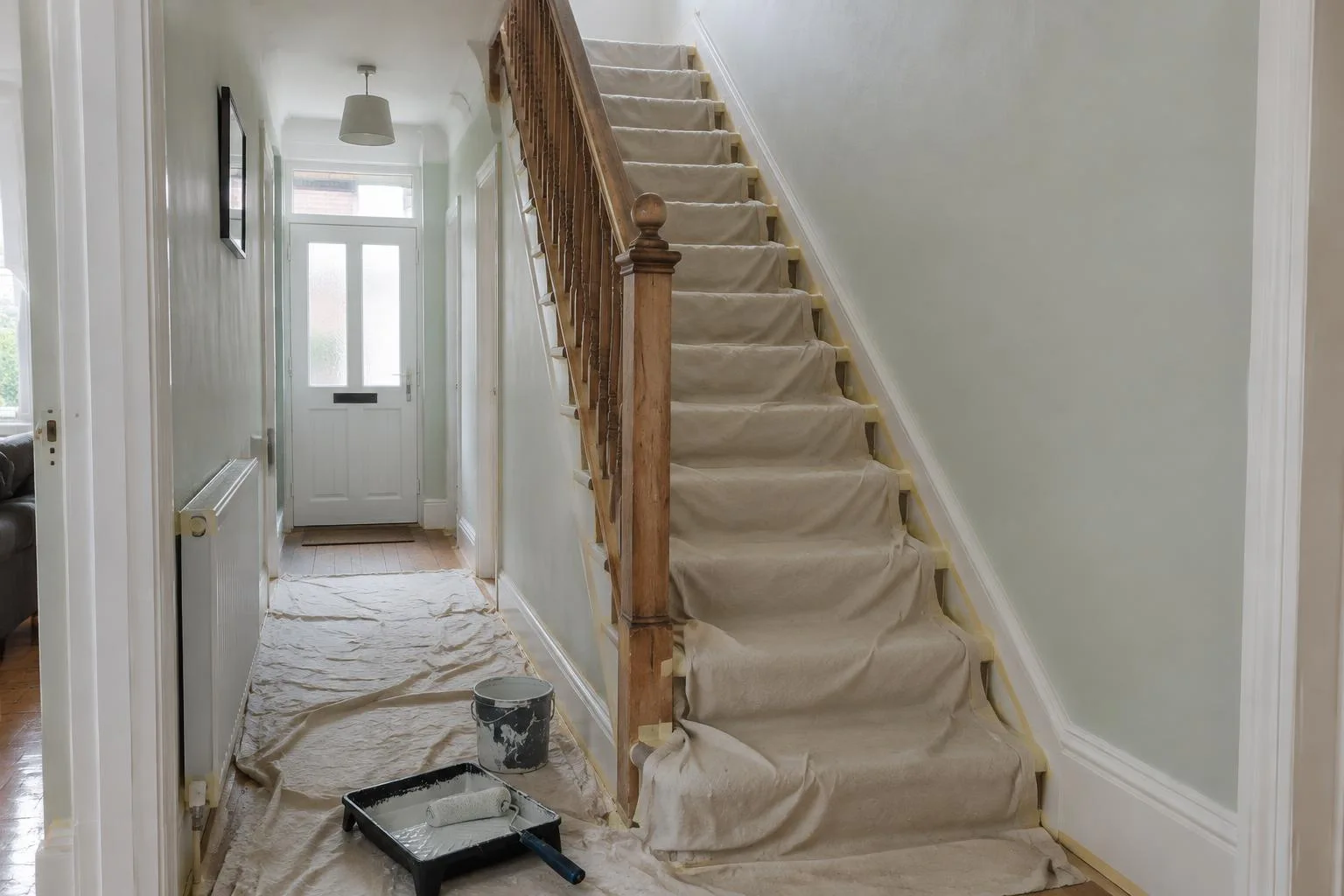
In most rooms, preparation takes as long as the painting, and often longer. Protecting floors and furniture, removing fittings, filling cracks and holes, sanding, sealing stains and masking edges all come before the first coat. A room in good condition might need a short preparation stage; one with cracked plaster, old wallpaper or flaking paint can need far more. Some fillers must dry before they can be sanded and painted, which adds waiting time.
Drying and recoat times
Every paint has a time after which it is touch dry and a longer time before the next coat can go on, set out on the tin. Water-based emulsions generally dry faster than oil-based paints. Cold rooms, high humidity and poor ventilation slow drying down, which is why the same room can take longer in winter than in summer. Rushing the second coat onto a soft first coat can drag and leave a patchy finish, so a good decorator plans other tasks around the waiting.
Ceilings and woodwork
Ceilings are usually done first, so drips do not land on finished walls. Overhead work is slower and needs steps or a platform. Woodwork usually comes last and is detailed work: doors, frames, skirting and windows need sanding, priming where bare, and often an undercoat and topcoat, each with its own drying time. Gloss and satin also take longer to harden than emulsion.
The number of coats
Two coats is the usual standard on walls and ceilings. A dramatic colour change can need three. New plaster needs a mist coat first. Every extra coat adds application time and another round of drying, and woodwork moving from oil-based to water-based paint may need a dedicated primer stage.
Decorating a room you are living in
An occupied room adds time. Furniture has to be moved, covered and moved back, and bedrooms or kitchens may need to stay partly usable each evening. Working around a household, such as pausing for a school run or keeping one route through clear, means the work is spread more thinly across the day. Emptying the room yourself saves time.
Kitchens, bathrooms and hallways
Some rooms are slower than their size suggests. Kitchens have cupboards, worktops and appliances to mask around, and walls that need degreasing. Bathrooms are often small but full of tiles, pipes and fittings, with moisture that can slow drying. Hallways connect to every room, so they are worked around people coming and going, and the stairwell above them may need access equipment. Expect these rooms to take longer than a simple bedroom.
How you can help
Clearing the room of small items, taking down curtains and pictures, and moving whatever furniture you can makes a real difference. Choosing colours before work begins avoids delays, as does making sure the heating can be kept on in cold weather so paint dries properly. Let your decorator know about pets, working from home and anything else that affects access.
A single room or the whole house
Decorating several rooms in one booking lets a decorator work in one room while another dries, which uses waiting time well.
Clearing up and putting back
At the end of the job, masking is removed, fittings go back on, furniture is returned and the room is cleaned of dust. This takes longer than most people expect, and it is worth allowing time for it in your plans.
Planning the timing
Rather than asking for an exact number of hours, ask how the decorator will sequence the job: preparation, ceiling, walls, woodwork, then reassembly. That shows you where the drying gaps fall and when the room will be back in use. If you have a deadline, such as guests arriving or a sale, say so at the start.