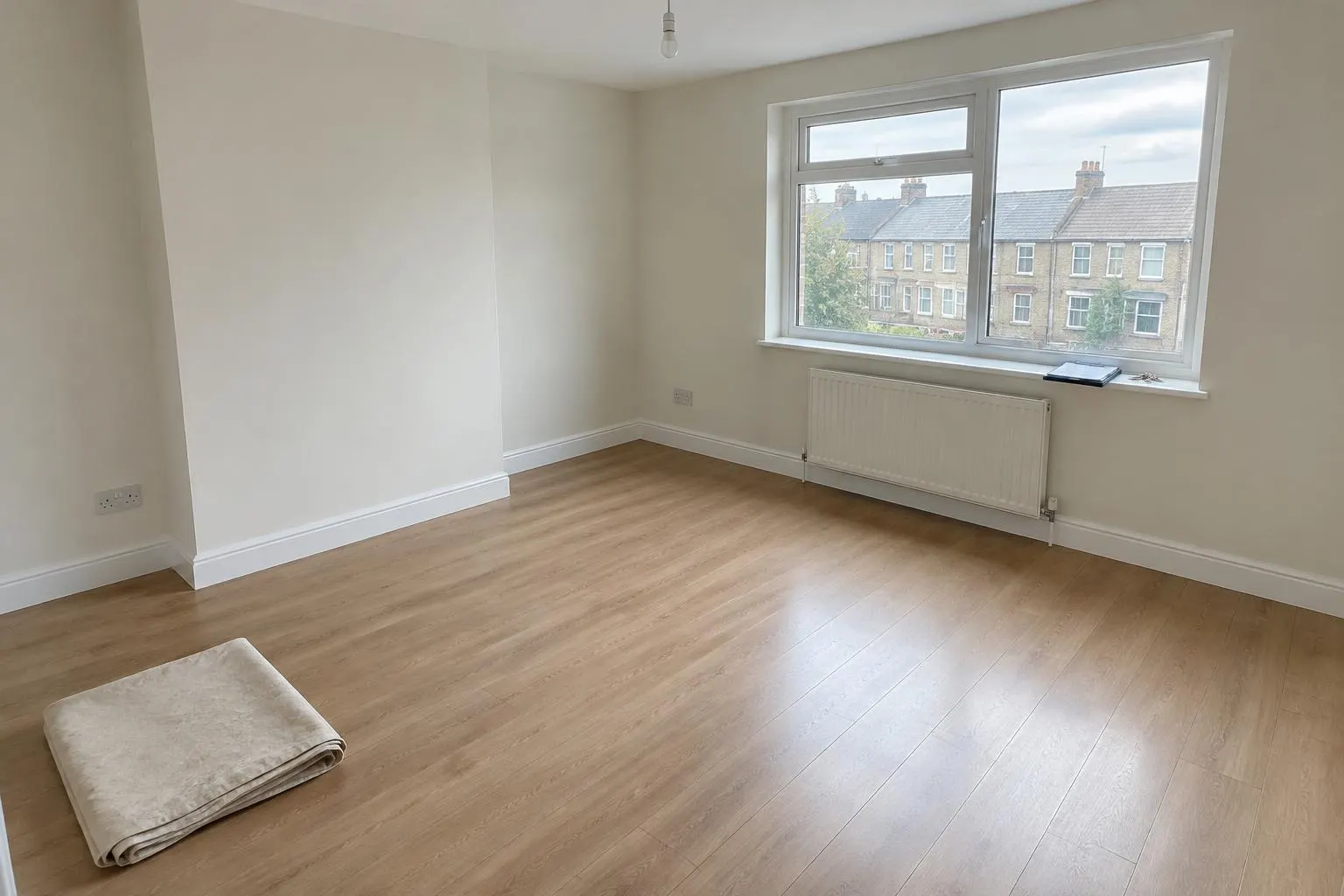
Why the stains come back through new paint
Nicotine and tar from tobacco smoke settle on every surface in a room, building up as a sticky, yellow-brown film. The residue is partly soluble in water. When ordinary water-based emulsion is applied over it, the moisture in the paint draws the stain up into the new coat. The wall can look fine while it is wet, then turn patchy yellow or brown as it dries, sometimes over a few days. Adding more coats of the same paint rarely solves it, and the residue can also stop new paint gripping properly.
Washing down first
The first job is to remove as much of the residue as possible. Walls, ceilings, doors and woodwork are washed with a sugar soap solution or a suitable degreasing cleaner, working from the top down and changing the water often, since it quickly turns brown. Then everything is rinsed with clean water so no cleaning residue is left behind, and allowed to dry thoroughly. Heavy staining may need more than one wash. It is messy work, so floors and anything left in the room are protected, and the room is kept well ventilated.
Stain-blocking primers
Even after washing, some staining remains in the surface. The key step is sealing it in with a stain-blocking primer before any emulsion goes on. These primers form a barrier that stops the remaining residue bleeding through. Different types exist, including solvent-based, shellac-based and some specialist water-based products, and each has its own instructions for use and drying. Lightly stained areas may only need spot priming, but where a whole room has been affected, it is usually best to prime every wall and ceiling so the finish is even. Once the primer has dried, normal emulsion can be applied in the usual number of coats.
Ceilings take the worst of it
Smoke rises, so ceilings are usually the most heavily stained surface in the room, along with the tops of walls and the areas around light fittings. Ceiling washing is slow overhead work, and a full coat of stain-blocking primer is nearly always needed before the finishing coats. Textured or artexed ceilings hold more residue in their pattern and can take extra cleaning. Ceiling roses, coving and cornices need the same treatment as the flat areas, or they will show yellow lines once the rest is white.
Woodwork, doors and radiators
Gloss and satin woodwork hold nicotine too, often appearing as a brownish tint on white doors, frames and skirting. Glossy surfaces do not absorb as much, so washing usually removes more, but the woodwork still needs sanding to give the new coat a key, and any remaining staining sealed with a suitable primer. Radiators and pipes get the same cleaning and are painted with a heat-suitable product once cold. Window frames and sills often have stains that run into condensation marks, so they are checked carefully.
Dealing with the smell
Smoke odour lingers in soft furnishings, carpets and curtains as well as on the walls. Washing and sealing the walls and ceilings helps a great deal, and stain-blocking primers can help lock in remaining odour from those surfaces. However, decorating alone will not remove smells held in carpet, underlay or upholstery. In rentals, those often need professional cleaning or replacing as a separate job. Good ventilation during and after the work helps too.
Rentals and void properties
For landlords and letting agents, nicotine staining is one of the most common issues when a tenancy ends. Because the property is empty, it is the ideal time to wash down and seal every affected room properly, rather than trying to touch up between tenancies. A neutral finish over a properly sealed surface gives the next tenant a clean start and avoids the stains reappearing a few weeks after they move in. Our end of tenancy decorating page explains how void work is planned, including keys and access.
Planning the job
When asking for a quote, mention that the property has nicotine staining and how heavy it is, and include photos of the ceilings. The extra washing and priming add time and materials, and a clear brief helps the quote reflect that from the start.